

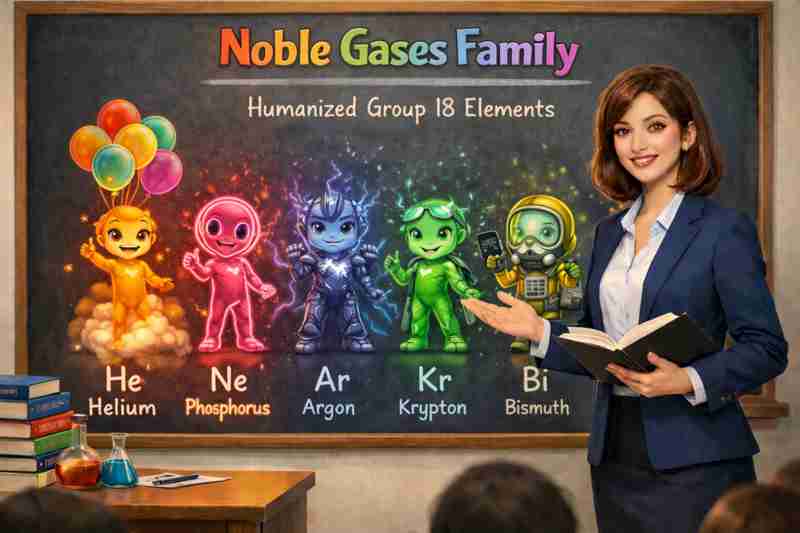
What is Noble Gases (Group 18 Elements| नोबल गैसें क्या हैं?
Periodic Table के Group 18 के तत्वों को Noble Gases या Inert Gases (निष्क्रिय गैसें) कहा जाता है। इन्हें “noble” इसलिए कहा जाता है क्योंकि ये सामान्य परिस्थितियों में लगभग किसी भी तत्व के साथ प्रतिक्रिया नहीं करते।
📌 परिभाषा (Definition):
Periodic Table के Group 18 में आने वाले अत्यंत कम reactive और chemically stable तत्व Noble Gases कहलाते हैं।
👉 इनकी stability का मुख्य कारण है — complete outer electron shell।
UP Board Chemistry में यह chapter conceptual और scoring दोनों है।
👉 ऐसे ही सरल और exam-focused Chemistry notes पढ़ने के लिए विजिट करें:
✅ gurugyanam.online
What is Online Marketing
What is Online Reputation Management
What is Noble Gases (Group 18 Elements
Members of Noble Gas Family | नोबल गैस परिवार के सदस्य
Group 18 में निम्न तत्व शामिल हैं:
👉 Helium (He)
👉 Neon (Ne)
👉 Argon (Ar)
👉 Krypton (Kr)
👉 Xenon (Xe)
👉 Radon (Rn)
📌 Trick to remember:
He Never Argues, Krypton Xtra Rare
What is Noble Gases (Group 18 Elements
Discovery of Noble Gases | नोबल गैसों की खोज
Noble gases की खोज 19वीं सदी के अंत में हुई।
✔ Helium सबसे पहले सूर्य के spectrum में पाया गया।
✔ बाद में scientists William Ramsay और Lord Rayleigh ने Argon की खोज की।
👉 Ramsay को Nobel Prize भी मिला।
📌 Exam Fact:
Helium was discovered in the Sun before Earth!
What is Noble Gases (Group 18 Elements
Electronic Configuration | इलेक्ट्रॉनिक विन्यास
Noble gases का outer shell पूरी तरह भरा होता है।
👉 General configuration:
ns² np⁶
✔ Helium exception है:
👉 1s²
Why Are Noble Gases Stable? | नोबल गैसें स्थिर क्यों हैं?
✔ Complete octet
✔ High ionization energy
✔ Zero electron affinity
👉 इसलिए ये आसानी से electrons gain या lose नहीं करते।
📌 यही कारण है कि इन्हें inert कहा जाता है।
What is Noble Gases (Group 18 Elements
Position in Periodic Table | आवर्त सारणी में स्थान
- Block → p-block
- Group → 18
- Extreme right side
👉 Halogens के बाद आते हैं।
General Characteristics | सामान्य विशेषताएँ
⭐ Chemically inert
⭐ Monoatomic gases
⭐ Colorless
⭐ Odorless
⭐ Non-flammable
👉 Nature में independent atoms के रूप में पाए जाते हैं।
What is Noble Gases (Group 18 Elements
Physical Properties | भौतिक गुण
✅ Atomic Size
👉 Down the group atomic radius बढ़ता है।
✅ Ionization Energy
👉 Noble gases की ionization energy बहुत high होती है।
Trend:
Decrease down the group।
✅ Boiling & Melting Points
👉 Very low।
Reason: Weak van der Waals forces।
What is Noble Gases (Group 18 Elements
✅ Density
Increase down the group।
What is Noble Gases (Group 18 Elements
Chemical Properties | रासायनिक गुण
Long time तक scientists मानते थे कि noble gases compounds नहीं बनाते।
लेकिन बाद में Xenon और Krypton के compounds खोजे गए।
✅ Reactivity
👉 Very low — लेकिन zero नहीं।
Why?
✔ Stable electronic configuration।
What is Noble Gases (Group 18 Elements
✅ Formation of Compounds
Xenon compounds:
✔ XeF₂
✔ XeF₄
✔ XeF₆
👉 Strong oxidizing agents।
📌 Exam favorite!
What is Noble Gases (Group 18 Elements
Why Only Xenon Forms Compounds?
✔ Large atomic size
✔ Lower ionization energy
👉 Fluorine और oxygen के साथ react करता है।
Uses of Noble Gases | नोबल गैसों के उपयोग
अब देखते हैं इन “inactive” gases की real-life importance।
✅ Helium (He)
✔ Balloons
✔ Cryogenics
✔ MRI cooling
👉 Non-flammable — safer than hydrogen।
✅ Neon (Ne)
✔ Advertising signs
✔ Glow lamps
👉 Bright orange-red light।
What is Noble Gases (Group 18 Elements
✅ Argon (Ar)
✔ Electric bulbs
✔ Welding
👉 Oxidation रोकता है।
✅ Krypton (Kr)
✔ High-performance lamps
✔ Photography flashes
✅ Xenon (Xe)
✔ Car headlights
✔ Laser technology
✔ Space propulsion
✅ Radon (Rn)
✔ Cancer therapy (limited use)
⚠ Radioactive — health risk।
Why Are Noble Gases Called Inert? | इन्हें निष्क्रिय क्यों कहा जाता है?
👉 Because:
✔ Stable configuration
✔ No tendency to bond
लेकिन modern chemistry ने दिखाया कि “inert” शब्द पूरी तरह सही नहीं है।
👉 इसलिए अब इन्हें “Noble” कहा जाता है।
Trends in Noble Gases | आवर्तीय प्रवृत्तियाँ
| Property | Trend |
| Atomic Size | ↑ |
| Ionization Energy | ↓ |
| Density | ↑ |
| Reactivity | Slightly ↑ |
📌 Table याद करें — exam में आता है।
Applications in Modern Technology | आधुनिक तकनीक में उपयोग
✔ Space research
✔ Lighting systems
✔ Medical imaging
✔ Semiconductor manufacturing
👉 Technology heavily dependent।
Biological Impact | जैविक प्रभाव
✔ Helium → Non-toxic
✔ Radon → Radioactive hazard
👉 Radon exposure lung cancer का कारण बन सकता है।
Environmental Importance | पर्यावरणीय महत्व
✔ Argon atmosphere का हिस्सा है।
✔ Noble gases generally pollution नहीं करते।
👉 Eco-friendly gases।
Advantages of Noble Gases | फायदे
✔ Chemically stable
✔ Safe for lighting
✔ Non-flammable
✔ Useful in research
Disadvantages | नुकसान
❌ Expensive extraction
❌ Radon radioactive
Extraction of Noble Gases | नोबल गैसों का निष्कर्षण
इनका मुख्य स्रोत है — liquid air।
👉 Fractional distillation से अलग किया जाता है।
📌 Important process!
Exam Important Points | परीक्षा उपयोगी तथ्य
⭐ Group 18 elements
⭐ Monoatomic gases
⭐ Xe forms compounds
⭐ Helium exception (duplet)
⭐ Discovered by Ramsay
👉 Direct questions आते हैं।
Common Mistakes Students Make | छात्रों की सामान्य गलतियाँ
❌ Noble gases बिल्कुल react नहीं करते — ऐसा मान लेना
❌ Helium configuration भूलना
❌ Xenon compounds याद न रखना
👉 Concept clarity जरूरी।
Why Students Must Study Noble Gases? | यह टॉपिक क्यों जरूरी है?
✔ Board exams में repeated
✔ Easy theory
✔ Concept-based
✔ High scoring
👉 Smart preparation का हिस्सा।
Future of Noble Gases | नोबल गैसों का भविष्य
✔ Space propulsion
✔ Quantum computing
✔ Advanced lasers
👉 Future technologies में बड़ा योगदान।
Conclusion | निष्कर्ष
Noble gases periodic table के सबसे stable तत्व हैं। अपनी inert nature के बावजूद ये lighting, medicine, space technology और electronics में अत्यंत महत्वपूर्ण भूमिका निभाते हैं।
UP Board students को electronic configuration, trends और xenon compounds जरूर याद रखने चाहिए। यह chapter आसान, conceptual और scoring है।
👉 ऐसे ही सरल और exam-focused Chemistry notes पढ़ने के लिए विजिट करें:
✅ gurugyanam.online
FAQs – What is Noble Gases (Group 18 Elements / निष्क्रिय गैसें)
Q1. Noble gases किस group में हैं?
Ans. Group 18।
Q2. Electronic configuration?
Ans. ns² np⁶।
Q 3. Helium exception क्यों?
Ans. 1s² configuration।
Q 4. Noble gases inert क्यों?
Ans. Complete shell।
Q5. Monoatomic क्यों?
Ans. Stable atoms।
Q 6. Xenon compounds example?
Ans. XeF₄।
Q7. Helium use?
Ans. Balloons।
Q8. Neon use?
Ans. Advertising lights।
Q9. Argon use?
Ans. Bulbs।
Q10. Radon harmful क्यों?
Ans. Radioactive।
Q11. Ionization energy कैसी?
Ans. High।
Q12. Reactivity trend?
Ans. Slightly increase।
Q13. Extraction कैसे?
Ans. Liquid air।
Q14. Fluorine के साथ कौन react करता है?
Ans. Xenon।
Q15. Density trend?
Ans. Increase।
Q 16. सबसे हल्की noble gas?
Ans. Helium।
Q 17. Stable configuration?
Ans. Octet।
Q18. Ramsay कौन थे?
Ans. Discoverer।
Q19. Lighting में कौन?
Ans. Neon।
Q20. Easy chapter है?
Ans. हाँ, scoring।
👉 ऐसे ही सरल और exam-focused Chemistry notes पढ़ने के लिए विजिट करें:
✅ gurugyanam.online