

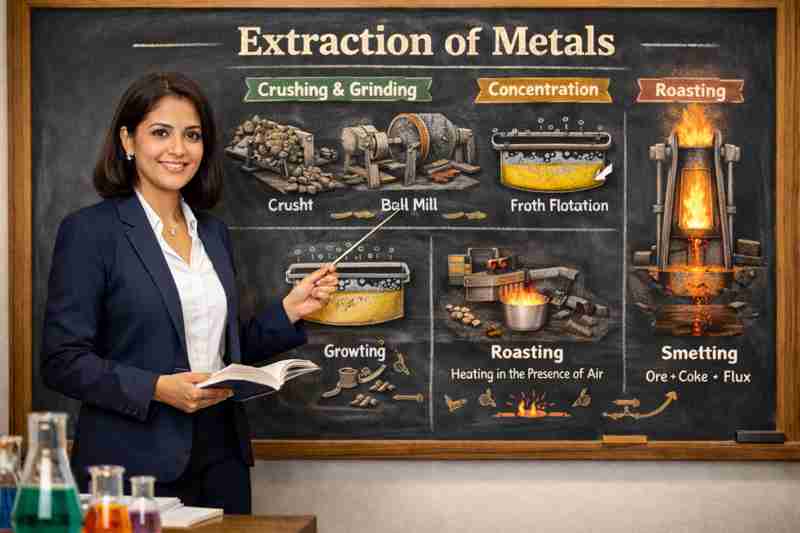
What is Extraction of Metals ? | धातुओं का निष्कर्षण क्या है?
Chemistry में Extraction of Metals वह प्रक्रिया है जिसके द्वारा हम पृथ्वी की परत (Earth’s crust) से प्राप्त अयस्क (Ore) से शुद्ध धातु (Metal) निकालते हैं।
अधिकांश धातुएँ प्रकृति में free state में नहीं मिलतीं, बल्कि compounds के रूप में पाई जाती हैं। इसलिए उन्हें अलग करने के लिए कई chemical processes अपनानी पड़ती हैं।
📌 परिभाषा (Definition):
अयस्क से धातु को अलग करके शुद्ध रूप में प्राप्त करने की प्रक्रिया को धातु निष्कर्षण कहते हैं।
👉 सरल शब्दों में:
Ore → Metal = Extraction
यह chapter metallurgy का core है और UP Board exams में अत्यंत महत्वपूर्ण माना जाता है।
👉 ऐसे ही सरल और exam-focused Chemistry notes पढ़ने के लिए विजिट करें:
✅ gurugyanam.online
WordPress Website Design
What is Website Designing
What is Extraction of Metals
Occurrence of Metals | प्रकृति में धातुओं की उपस्थिति
धातुएँ दो प्रकार से मिलती हैं:
✅ 1. Native State (मूल अवस्था)
कम reactive धातुएँ free form में मिलती हैं।
Examples:
✔ Gold
✔ Silver
✔ Platinum
👉 इन्हें आसानी से प्राप्त किया जा सकता है।
✅ 2. Combined State (संयोजित अवस्था)
अधिकांश धातुएँ compounds में मिलती हैं।
✔ Oxides
✔ Sulphides
✔ Carbonates
👉 इन्हें extract करने के लिए metallurgy जरूरी है।
Reactivity Series and Extraction | अभिक्रियाशीलता श्रेणी और निष्कर्षण
Extraction method metal की reactivity पर निर्भर करता है।
✅ Highly Reactive Metals
👉 Sodium, Potassium, Calcium, Aluminium
- Carbon से reduce नहीं होते
- Electrolysis से निकाले जाते हैं
✅ Moderately Reactive Metals
👉 Iron, Zinc, Lead
- Carbon reduction possible
- Smelting उपयोगी
✅ Low Reactive Metals
👉 Gold, Silver
- Native state में मिलते हैं
- Minimal processing
📌 Exam Tip:
Reactivity decides extraction method.‘
What is Extraction of Metals
Steps of Extraction of Metals | धातु निष्कर्षण के चरण
Metal extraction एक systematic process है।
👉 1. Crushing and Grinding
👉 2. Concentration of Ore
👉 3. Conversion to Oxide
👉 4. Reduction
👉 5. Refining
अब हर step को detail में समझते हैं।
What is Extraction of Metals
1. Crushing and Grinding | अयस्क को तोड़ना और पीसना
Ore को छोटे टुकड़ों में तोड़ा जाता है।
क्यों?
✔ Surface area बढ़ता है
✔ Chemical reactions faster होती हैं
यह extraction का पहला physical step है।
2. Concentration of Ore | अयस्क का सांद्रण
इस process में impurities (Gangue) हटाई जाती हैं।
Methods:
✔ Hydraulic washing
✔ Magnetic separation
✔ Froth flotation
✔ Leaching
👉 इससे metal percentage बढ़ता है।
3. Conversion of Ore into Oxide | अयस्क को ऑक्साइड में बदलना
Oxide form में metal निकालना आसान होता है।
✅ Calcination (कैल्सिनेशन)
- Limited oxygen
- Carbonate ores
Example:
ZnCO₃ → ZnO + CO₂
✅ Roasting (रोस्टिंग)
- Excess oxygen
- Sulphide ores
Example:
2ZnS + 3O₂ → 2ZnO + 2SO₂
📌 Roasting vs Calcination — exam favorite!
What is Extraction of Metals
4. Reduction of Metal Oxide | ऑक्साइड का अपचयन
यह सबसे critical step है।
👉 Oxygen हटाकर metal प्राप्त किया जाता है।
Methods of Reduction
✔ Carbon Reduction
Fe₂O₃ + 3C → 2Fe + 3CO
✔ Iron extraction
✔ Self Reduction
Copper sulphide partially oxidize होकर खुद reduce होता है।
✔ Electrolytic Reduction
Highly reactive metals के लिए।
👉 Example: Aluminium extraction
📌 Hall-Héroult process याद रखें।
5. Smelting | स्मेल्टिंग
Ore को furnace में flux के साथ heat किया जाता है।
👉 Flux + Gangue → Slag
Molten metal नीचे जमा हो जाता है।
✔ Blast furnace → Iron
6. Refining | शुद्धिकरण
Impure metal को pure बनाया जाता है।
Methods:
✔ Electrolytic refining
✔ Distillation
✔ Zone refining
👉 Copper purification बहुत common example है।
What is Extraction of Metals
Role of Flux and Slag | फ्लक्स और स्लैग की भूमिका
Flux impurities से react करता है।
👉 Example:
CaO + SiO₂ → CaSiO₃ (Slag)
✔ Slag हल्का होता है
✔ Metal के ऊपर float करता है
Ellingham Diagram | एलिंघम आरेख
यह diagram बताता है कि कौन सा oxide आसानी से reduce होगा।
👉 Lower ΔG → More stable oxide
📌 Competitive exams में important।
Energy Requirement in Extraction | ऊर्जा की आवश्यकता
Metal extraction energy-intensive process है।
✔ Furnaces
✔ Electrolysis
✔ High temperature
👉 इसलिए efficient technologies जरूरी हैं।
Environmental Impact | पर्यावरणीय प्रभाव
Extraction से:
❌ Air pollution
❌ Water contamination
❌ Land degradation
Solutions:
✔ Recycling
✔ Green metallurgy
✔ Pollution control
Advantages of Metal Extraction | धातु निष्कर्षण के फायदे
✔ Industrial growth
✔ Infrastructure
✔ Transportation
✔ Technology
👉 Modern civilization metals पर निर्भर है।
Disadvantages | नुकसान
❌ Mining hazards
❌ Energy consumption
❌ Environmental damage
👉 Sustainable extraction future है।
Industrial Importance | औद्योगिक महत्व
Extraction के बिना:
❌ Buildings नहीं
❌ Vehicles नहीं
❌ Electronics नहीं
👉 Economy metals पर चलती है।
What is Extraction of Metals
Exam Important Points | परीक्षा उपयोगी तथ्य
⭐ Reactivity series याद करें
⭐ Roasting → Sulphides
⭐ Calcination → Carbonates
⭐ Electrolysis → Highly reactive metals
⭐ Flux + Gangue = Slag
👉 Direct questions बनते हैं।
Common Mistakes Students Make | छात्रों की सामान्य गलतियाँ
❌ Roasting और calcination confuse करना
❌ Reduction step भूलना
❌ Reactivity series ignore करना
👉 Concept समझें।
Why Students Must Learn Extraction? | यह टॉपिक क्यों जरूरी है?
✔ Metallurgy का foundation
✔ Board exams में repeated
✔ Easy reactions
✔ High scoring
👉 Smart preparation का हिस्सा।
What is Extraction of Metals
Future of Metal Extraction | धातु निष्कर्षण का भविष्य
✔ Hydrogen reduction
✔ Bio-mining
✔ Recycling metals
✔ Low-carbon processes
👉 Sustainable metallurgy आने वाला future है।
Conclusion | निष्कर्ष
Extraction of Metals chemistry का एक fundamental और अत्यंत महत्वपूर्ण chapter है। यह न केवल exams के लिए जरूरी है बल्कि industrial world को समझने के लिए भी essential है।
UP Board students को steps, reactions और reactivity series जरूर याद रखनी चाहिए। यह chapter conceptual, practical और scoring है।
👉 ऐसे ही सरल और exam-focused Chemistry notes पढ़ने के लिए विजिट करें:
✅ gurugyanam.online
faq What is Extraction of Metals
FAQs – What is Extraction of Metals (धातुओं का निष्कर्षण)
Q1. What is Extraction of Metals ?
Ans. Ore से metal निकालना।
Q2. First step क्या है?
Ans. Crushing।
Q3. Concentration क्यों?
Ans. Impurities हटाने के लिए।
Q4. Roasting किसके लिए?
Ans. Sulphide ores।
Q5. Calcination किसके लिए?
Ans. Carbonates।
Q6. Reduction क्या है?
Ans. Oxygen हटाना।
Q7. Highly reactive metals कैसे?
Ans. Electrolysis।
Q8. Blast furnace किसके लिए?
Ans. Iron।
Q9. Flux क्या करता है?
Ans. Gangue हटाता है।
Q10. Slag क्या है?
Ans. Flux + impurities।
Q11. Refining क्यों जरूरी?
Ans. Purity के लिए।
Q12. Self reduction example?
Ans. Copper।
Q 13. Ellingham diagram क्या है?
Ans. Reduction guide।
Q 14. Native metals example?
Ans. Gold।
Q15. Electrolytic refining example?
Ans. Copper।
Q 16. Extraction energy-intensive क्यों?
Ans. High temperature।
Q 17. Pollution कैसे कम?
Ans. Recycling।
Q 18. Metallurgy का core?
Ans. Extraction।
Q 19. Easy chapter है?
Ans. हाँ।
Q20. Modern life metals पर dependent?Ans. हाँ
👉 ऐसे ही सरल और exam-focused Chemistry notes पढ़ने के लिए विजिट करें:
✅ gurugyanam.online