

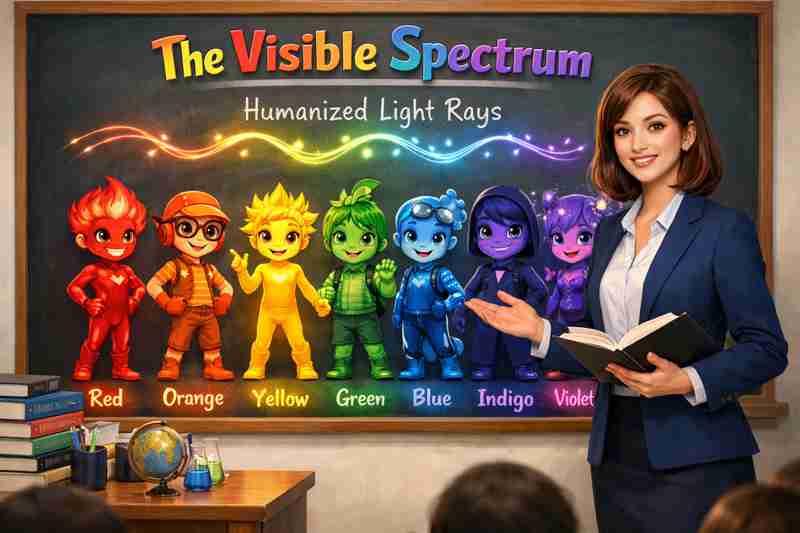
What are Visible Rays ? | दृश्यमान किरणें क्या हैं?
Physics में What are Visible Rays या Visible Light विद्युतचुंबकीय स्पेक्ट्रम का वह भाग है जिसे मानव आँखें सीधे देख सकती हैं। यह प्रकाश हमें दुनिया को देखने, रंगों को पहचानने और वस्तुओं के आकार समझने में मदद करता है।
📌 परिभाषा (Definition):
Electromagnetic spectrum का वह भाग जो मानव आँखों द्वारा देखा जा सकता है, उसे Visible Light या Visible Rays कहते हैं।
👉 सरल शब्दों में:
जो प्रकाश हमें दिखाई देता है — वही Visible Light है।
UP Board Physics में यह chapter बेहद महत्वपूर्ण है क्योंकि इससे numericals, theory और diagrams तीनों प्रकार के प्रश्न आते हैं।
👉 ऐसे ही सरल और exam-focused Physics notes पढ़ने के लिए विजिट करें:
✅ gurugyanam.online
What is Local Business Listi
Discovery of Visible Light Spectrum | दृश्य प्रकाश स्पेक्ट्रम की खोज
Visible spectrum को समझाने का श्रेय महान वैज्ञानिक Isaac Newton को जाता है।
Newton का प्रयोग:
उन्होंने prism से सूर्य के सफेद प्रकाश को गुजारा और पाया कि यह कई रंगों में विभाजित हो जाता है।
👉 इस प्रक्रिया को Dispersion of Light (प्रकाश का प्रकीर्णन) कहते हैं।
📌 Newton ने सिद्ध किया:
White light = कई रंगों का मिश्रण
Position in Electromagnetic Spectrum | स्पेक्ट्रम में दृश्य प्रकाश का स्थान
Electromagnetic spectrum का क्रम:
👉 Radio → Microwave → Infrared → Visible → Ultraviolet → X-ray → Gamma
📌 Visible light infrared और ultraviolet के बीच स्थित होती है।
✔ Infrared → Longer wavelength
✔ Ultraviolet → Shorter wavelength
What are Visible Rays
Wavelength and Frequency | तरंगदैर्घ्य और आवृत्ति
✅ Wavelength Range:
👉 लगभग 400 nm से 700 nm
✅ Frequency Range:
👉 लगभग 4 × 10¹⁴ Hz से 7.5 × 10¹⁴ Hz
📌 सबसे महत्वपूर्ण formula:
👉 c = νλ
जहाँ —
✔ c = प्रकाश की गति (3×10⁸ m/s)
✔ ν = frequency
✔ λ = wavelength
👉 Frequency ↑ → Wavelength ↓
यह formula exam numericals के लिए बहुत जरूरी है।
What are Visible Rays
Speed of Visible Light | दृश्य प्रकाश की गति What are Visible Rays
Visible light vacuum में 3×10⁸ m/s की गति से चलती है।
👉 यह universe की सबसे तेज गति मानी जाती है।
📌 Important Fact:
सूर्य का प्रकाश पृथ्वी तक लगभग 8 मिनट 20 सेकंड में पहुँचता है।
Colors of Visible Spectrum | दृश्य स्पेक्ट्रम के रंग
जब white light prism से गुजरती है, तो यह सात रंगों में टूट जाती है।
👉 क्रम:
VIBGYOR
- Violet (बैंगनी)
- Indigo (जामुनी)
- Blue (नीला)
- Green (हरा)
- Yellow (पीला)
- Orange (नारंगी)
- Red (लाल)
📌 Trick: VIBGYOR याद रखें — exam favorite!
Wavelength Order of Colors | रंगों का तरंगदैर्घ्य क्रम
| Color | Wavelength | Energy |
| Violet | Shortest | Highest |
| Red | Longest | Lowest |
👉 इसलिए violet light ज्यादा energetic होती है।
Nature of Visible Light | दृश्य प्रकाश की प्रकृति
Visible light में dual nature होता है।
✅ Wave Nature
Reflection, refraction, interference दिखाती है।
✅ Particle Nature
Photons से बनी होती है।
👉 इसे Wave-Particle Duality कहते हैं।
What are Visible Rays
Properties of Visible Light | दृश्य प्रकाश के गुण
⭐ Straight line में travel करती है
⭐ Reflection दिखाती है
⭐ Refraction संभव
⭐ Dispersion होता है
⭐ Polarization संभव
⭐ Speed constant
👉 ये properties exam में बार-बार पूछी जाती हैं।
Dispersion of Light | प्रकाश का प्रकीर्णन
जब white light prism से गुजरती है, तो अलग-अलग wavelengths अलग angles पर मुड़ती हैं।
👉 Result: Rainbow-like spectrum।
Real-Life Example:
🌈 Rainbow (इंद्रधनुष)
Rain droplets छोटे prisms की तरह काम करते हैं।
Reflection of Visible Light | प्रकाश का परावर्तन
जब light किसी surface से टकराकर वापस लौटती है, तो इसे reflection कहते हैं।
📌 Laws of Reflection:
1️⃣ Angle of incidence = Angle of reflection
2️⃣ Incident ray, reflected ray और normal एक plane में होते हैं।
👉 Mirror इसी principle पर काम करता है।
What are Visible Rays
Refraction of Visible Light | प्रकाश का अपवर्तन
जब light एक medium से दूसरे medium में जाती है, तो उसकी speed बदलती है और वह मुड़ जाती है।
👉 इसे refraction कहते हैं।
Examples:
✔ पानी में टेढ़ी दिखती pencil
✔ Lenses
✔ Optical instruments
Scattering of Light | प्रकाश का प्रकीर्णन (Scattering)
Atmosphere के particles light को scatter करते हैं।
👉 Sky Blue क्यों?
Blue light ज्यादा scatter होती है।
👉 Sunset Red क्यों?
Red कम scatter होती है।
📌 Exam favorite concept!
Human Eye and Visible Light | मानव आँख और दृश्य प्रकाश
Human eye visible spectrum को detect करती है।
Eye Sensitive Range:
👉 लगभग 555 nm (Green region)
इसलिए हमें हरा रंग ज्यादा bright लगता है।
What are Visible Rays
Sources of Visible Light | दृश्य प्रकाश के स्रोत
Natural Sources:
✔ Sun
✔ Stars
✔ Fire
Artificial Sources:
✔ Bulb
✔ LED
✔ Tube light
✔ Laser
Applications of Visible Light | दृश्य प्रकाश के उपयोग
✅ 1. Vision (देखना)
सबसे obvious use — हम दुनिया देख पाते हैं।
✅ 2. Photography & Cameras
Image formation।
✅ 3. Optical Instruments
✔ Microscope
✔ Telescope
✔ Binoculars
✅ 4. Fiber Optics
High-speed data transmission।
✅ 5. Medical Field
✔ Endoscopy
✔ Laser surgery
✅ 6. Solar Energy
Solar panels sunlight convert करते हैं।
Advantages of Visible Light | फायदे
✔ Safe radiation
✔ Vision possible
✔ Energy source
✔ Communication
Disadvantages | नुकसान
❌ Extremely bright light → eye damage
❌ Laser harmful हो सकता है
👉 Controlled exposure जरूरी।
Exam Important Points | परीक्षा उपयोगी तथ्य
⭐ Visible range → 400–700 nm
⭐ Newton → Dispersion
⭐ VIBGYOR
⭐ Speed → 3×10⁸ m/s
⭐ Violet → Highest energy
⭐ Red → Longest wavelength
👉 ये facts exam में सीधे पूछे जाते हैं।
Why Visible Light is Important? | दृश्य प्रकाश क्यों महत्वपूर्ण है?
सोचिए अगर visible light न हो:
❌ Vision नहीं
❌ Plants photosynthesis नहीं करेंगे
❌ Life impossible
👉 यह पृथ्वी पर जीवन का आधार है।
What are Visible Rays
Future of Visible Light Technology | दृश्य प्रकाश तकनीक का भविष्य
✔ Li-Fi (Light-based internet)
✔ Advanced lasers
✔ Smart lighting
✔ Augmented reality
👉 Technology तेजी से evolve हो रही है।
Conclusion | निष्कर्ष
Visible Rays हमारे जीवन का सबसे महत्वपूर्ण हिस्सा हैं। यह न केवल हमें देखने की क्षमता देती हैं बल्कि science, medicine और technology की foundation भी हैं।
UP Board students को wavelength range, VIBGYOR, dispersion और formulas जरूर याद रखने चाहिए। यह chapter आसान, conceptual और scoring है।
What are Visible Rays
👉 ऐसे ही सरल और exam-focused Physics notes पढ़ने के लिए विजिट करें:
✅ gurugyanam.online
FAQs – What are Visible Rays / Visible Light (दृश्यमान किरणें
Q1. What are Visible Rays ?
Ans. जो प्रकाश मानव आँख देख सकती है।
Q2. Range क्या है?
Ans. 400–700 nm।
Q3. Discovery किसने की?
Ans. Isaac Newton।
Q4. VIBGYOR क्या है?
Ans. Seven colors order।
Q5. Speed कितनी है?
Ans. 3×10⁸ m/s।
Q 6. Violet की energy कैसी?
Ans. Highest।
Q 7. Red की wavelength कैसी?
Ans. Longest।
Q8. Dispersion क्या है?
Ans. White light का colors में टूटना।
Q 9. Rainbow क्यों बनता है?
Ans. Dispersion।
Q 10. Reflection क्या है?
Ans. Light का वापस लौटना।
Q11. Refraction क्या है?
Ans. Light का मुड़ना।
Q12. Sky blue क्यों?
Ans. Scattering।
Q13. Human eye किसके प्रति sensitive है?
Ans. Green light।
Q 14. Visible light medium मांगती है?
Ans. नहीं।
Q15. Radiation type?
Ans. Non-ionizing।
Q16. Formula relation?
Ans. c = νλ
Q17. Sources क्या हैं?
Ans. Sun, bulb।
Q 18. Fiber optics में use?
Ans. Yes।
Q19. Life के लिए जरूरी?
Ans. हाँ।
Q20. Biggest advantage?
Ans. Vision।
👉 ऐसे ही सरल और exam-focused Physics notes पढ़ने के लिए विजिट करें:
✅ gurugyanam.online








[…] […]
[…] […]