

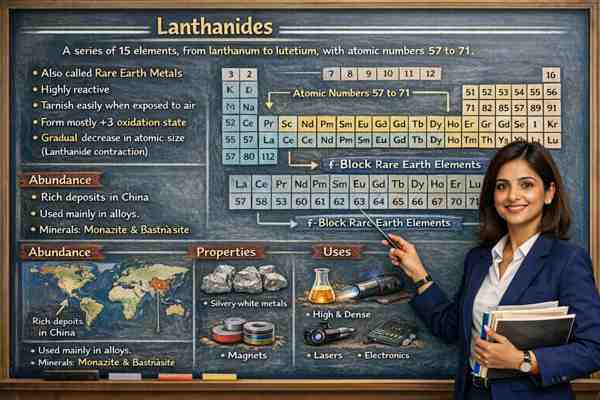
What are Lanthanides ? | लैंथेनाइड्स क्या हैं?
What are Lanthanides Periodic Table के f-block elements में आने वाले atomic number 57 से 71 तक के तत्वों को Lanthanides (लैंथेनाइड्स) कहा जाता है। ये तत्व Lanthanum (La) के बाद शुरू होते हैं, इसलिए इनका नाम Lanthanides पड़ा।
📌 परिभाषा (Definition):
वे f-block तत्व जिनमें अंतिम इलेक्ट्रॉन 4f-orbital में प्रवेश करता है, Lanthanides कहलाते हैं।
👉 इन्हें अक्सर Rare Earth Elements (दुर्लभ मृदा तत्व) भी कहा जाता है।
UP Board Chemistry में यह chapter conceptual और exam-oriented दोनों है।
👉 ऐसे ही सरल और exam-focused Chemistry notes पढ़ने के लिए विजिट करें:
✅ gurugyanam.online
What is Mobile App Marketing
What is Media Planning
Position in Periodic Table | आवर्त सारणी में स्थान
✔ Block → f-block
✔ Period → 6
✔ Atomic Numbers → 57–71
👉 इन्हें periodic table के नीचे अलग दिखाया जाता है ताकि table compact रहे।
📌 Exam Tip:
Lanthanides = First inner transition series
List of Lanthanides | लैंथेनाइड तत्वों की सूची
👉 Lanthanum (La)
👉 Cerium (Ce)
👉 Praseodymium (Pr)
👉 Neodymium (Nd)
👉 Promethium (Pm)
👉 Samarium (Sm)
👉 Europium (Eu)
👉 Gadolinium (Gd)
👉 Terbium (Tb)
👉 Dysprosium (Dy)
👉 Holmium (Ho)
👉 Erbium (Er)
👉 Thulium (Tm)
👉 Ytterbium (Yb)
👉 Lutetium (Lu)
📌 इन सभी में properties काफी similar होती हैं।
What are Lanthanides
Electronic Configuration | इलेक्ट्रॉनिक विन्यास
Lanthanides का general configuration:
👉 [Xe] 4f¹–¹⁴ 5d⁰–¹ 6s²
Example:
Cerium → [Xe] 4f¹ 5d¹ 6s²
👉 4f electrons धीरे-धीरे भरते हैं।
General Characteristics | सामान्य विशेषताएँ
⭐ Soft metals
⭐ Silvery appearance
⭐ Good conductors
⭐ Highly reactive
⭐ Tarnish easily in air
👉 इन्हें संभालकर रखना पड़ता है।
Physical Properties | भौतिक गुण
✅ 1. Atomic Size
Lanthanide series में atomic radius धीरे-धीरे कम होता है।
👉 इसे ही Lanthanide Contraction कहते हैं।
(इसे आगे detail में समझेंगे)
✅ 2. Density
Generally increase करती है।
✅ 3. Melting Points
Relatively high।
✅ 4. Magnetic Behavior
कई lanthanides paramagnetic होते हैं।
👉 Unpaired electrons के कारण।
What are Lanthanides
Chemical Properties | रासायनिक गुण
✅ 1. Oxidation States | ऑक्सीकरण अवस्थाएँ
सबसे common oxidation state:
👉 +3
लेकिन कुछ elements +2 और +4 भी दिखाते हैं।
Examples:
✔ Ce⁴⁺
✔ Eu²⁺
📌 Exam favorite!
✅ 2. Reactivity
Lanthanides काफी reactive होते हैं।
✔ Water से react
✔ Oxygen से oxide बनाते हैं
👉 इसलिए इन्हें oil में store किया जाता है।
✅ 3. Formation of Oxides
General formula:
👉 Ln₂O₃
Mostly basic nature।
What are Lanthanides
✅ 4. Hydrides & Halides
✔ Stable compounds बनाते हैं
✔ Mostly ionic nature
What are Lanthanides
Lanthanide Contraction | लैंथेनाइड संकुचन
यह chapter का सबसे महत्वपूर्ण concept है।
📌 Definition:
What are Lanthanides
Lanthanide series में atomic size का धीरे-धीरे कम होना Lanthanide Contraction कहलाता है।
Why Does It Happen?
👉 4f electrons nucleus को effectively shield नहीं कर पाते।
Result:
✔ Effective nuclear charge बढ़ती है
✔ Atomic radius घटता है
Effects of Lanthanide Contraction | प्रभाव
✅ 1. Similarity Between Elements
Zirconium और Hafnium almost identical।
✅ 2. Difficulty in Separation
Properties similar होने से separation मुश्किल।
✅ 3. High Density
Atoms closer packed।
📌 Competitive exams में पूछा जाता है।
Color of Lanthanide Ions | लैंथेनाइड आयनों का रंग
Lanthanide ions colored होते हैं।
👉 Reason: f–f electronic transitions
Examples:
✔ Nd³⁺ → Pink
✔ Pr³⁺ → Green
📌 Color intensity कम होती है क्योंकि transitions weak होते हैं।
Magnetic Properties | चुंबकीय गुण
Unpaired electrons होने के कारण:
👉 Paramagnetism दिखाई देता है।
✔ MRI machines में उपयोग।
Occurrence of Lanthanides | लैंथेनाइड्स की प्राप्ति
ये free state में नहीं मिलते।
Important Ores:
✔ Monazite sand
✔ Bastnäsite
👉 Extraction complex process है।
Separation of Lanthanides | पृथक्करण
Properties similar होने से separation challenging है।
Methods:
✔ Ion exchange
✔ Solvent extraction
📌 Advanced but important।
Uses of Lanthanides | लैंथेनाइड्स के उपयोग
Modern technology में इनकी demand तेजी से बढ़ रही है।
✅ 1. Magnets
Neodymium magnets → बहुत powerful।
✔ Headphones
✔ Wind turbines
✅ 2. Electronics
✔ Smartphones
✔ LED screens
✅ 3. Glass Polishing
Cerium oxide → polishing agent।
✅ 4. Catalysts
Petroleum refining में उपयोग।
✅ 5. Lasers
Medical और industrial use।
Industrial Importance | औद्योगिक महत्व
✔ Hybrid vehicles
✔ Renewable energy
✔ Defense technology
👉 इन्हें “Technology Metals” भी कहा जाता है।
What are Lanthanides
Biological Impact | जैविक प्रभाव
Lanthanides का biological role limited है।
लेकिन:
👉 Excess exposure harmful हो सकता है।
Environmental Impact | पर्यावरणीय प्रभाव
Mining से:
❌ Soil damage
❌ Water pollution
👉 Sustainable extraction जरूरी।
Difference Between Lanthanides and Actinides | अंतर
| Basis | Lanthanides | Actinides |
| Radioactivity | Mostly non-radioactive | Radioactive |
| Orbitals | 4f | 5f |
| Oxidation state | +3 common | Variable |
Exam Important Points | परीक्षा उपयोगी तथ्य
⭐ Atomic numbers → 57–71
⭐ +3 oxidation state
⭐ Lanthanide contraction
⭐ f–f transitions
⭐ Rare earth elements
👉 Direct questions बनते हैं।
Common Mistakes Students Make | छात्रों की सामान्य गलतियाँ
❌ Lanthanide contraction भूलना
❌ Oxidation state गलत याद करना
❌ Actinides से confuse करना
👉 Concept clarity जरूरी।
Why Students Must Study Lanthanides? | यह टॉपिक क्यों जरूरी है?
✔ Board exams में important
✔ Concept-based
✔ Easy scoring
✔ Technology connection
👉 Smart preparation का हिस्सा।
Future of Lanthanides | लैंथेनाइड्स का भविष्य
✔ Electric vehicles
✔ Green energy
✔ Advanced electronics
✔ Space technology
👉 Future innovations इन्हीं पर आधारित हैं।
Conclusion | निष्कर्ष
What are Lanthanides chemistry के inner transition elements का एक महत्वपूर्ण समूह हैं। इनके unique properties और technological uses के कारण इनका महत्व लगातार बढ़ रहा है।
UP Board students को lanthanide contraction, oxidation states और uses जरूर याद रखने चाहिए। यह chapter conceptual और scoring दोनों है।
👉 ऐसे ही सरल और exam-focused Chemistry notes पढ़ने के लिए विजिट करें:
✅ gurugyanam.online
FAQs – What are Lanthanides (लैंथेनाइड्स)
Q 1. What are Lanthanides ?
Ans. f-block elements (57–71)।
Q2. Common oxidation state?
Ans. +3।
Q3. Lanthanide contraction क्या है?
Ans. Atomic size decrease।
Q4. Orbitals कौन से भरते हैं?
Ans. 4f।
Q5. Rare earth क्यों?
Ans. Difficult extraction।
Q6. Magnetic क्यों?
Ans. Unpaired electrons।
Q7. Colored ions क्यों?
Ans. f–f transitions।
Q8. Ore example?
Ans. Monazite।
Q 9. Powerful magnets किससे?
Ans. Neodymium।
Q 10. Separation मुश्किल क्यों?
Ans. Similar properties।
Q 11. Technology metals क्यों?
Ans. Electronics use।
Q 12. Reactive हैं?
Ans. हाँ।
Q13. Oil में क्यों store?
Ans. Air reaction रोकने के लिए।
Q14. Density trend?
Ans. Increase।
Q 15. Atomic size trend?
Ans. Decrease।
Q16. Actinides से difference?
Ans. Non-radioactive।
Q17. Catalyst use?
Ans. Petroleum refining।
Q 18. Laser में use?
Ans. हाँ।
Q19. Exam में important?
Ans. बहुत।
Q20. Easy chapter है?
Ans. हाँ, scoring।
👉 ऐसे ही सरल और exam-focused Chemistry notes पढ़ने के लिए विजिट करें:
✅ gurugyanam.online










[…] What are Lanthanides? | लैंथेनाइड्स क्या हैं? […]
[…] What are Lanthanides? | लैंथेनाइड्स क्या हैं? […]