

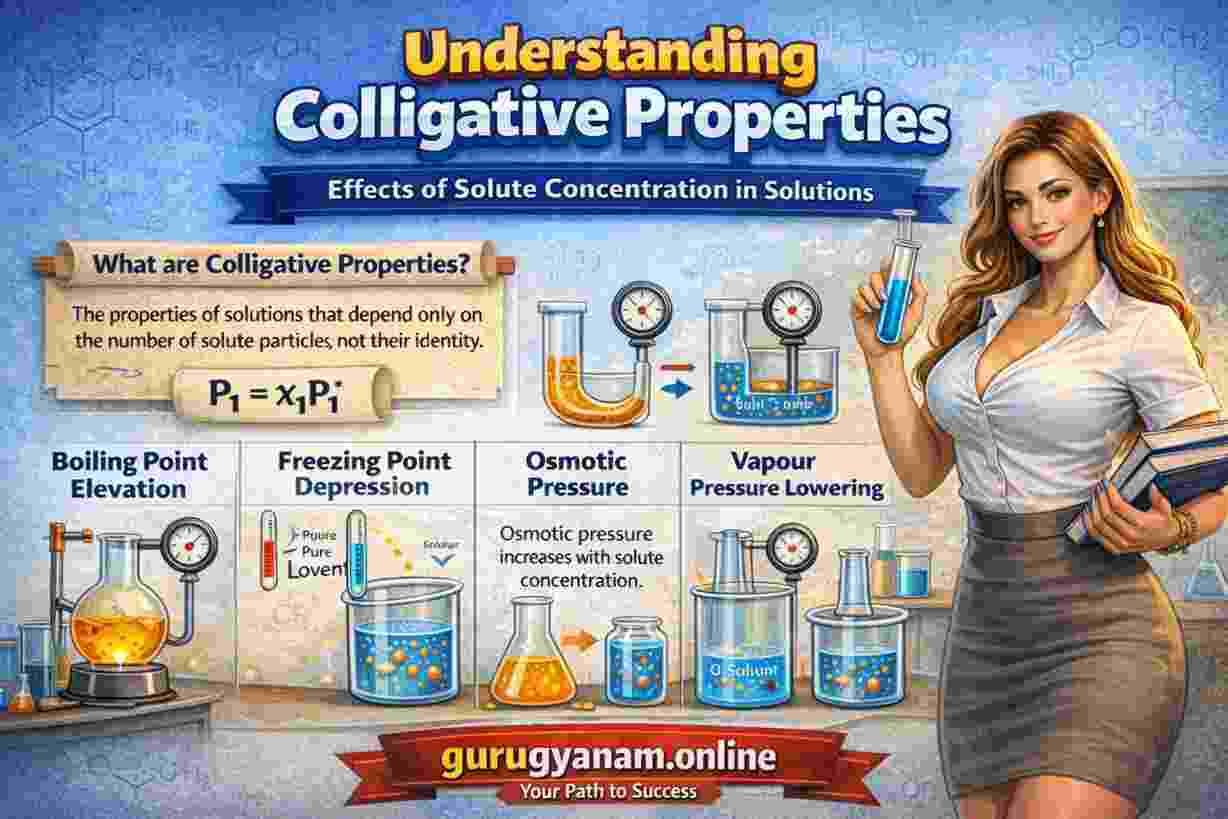
Class 12 Chemistry का Solutions chapter छात्रों के लिए थोड़ा कठिन माना जाता है, और इस chapter का सबसे महत्वपूर्ण भाग है Colligative Properties (सामूहिक गुणधर्म)।
UP Board की परीक्षाओं में इस topic से theory questions, numericals और conceptual questions लगभग हर साल पूछे जाते हैं।
👉 gurugyanam.online पर हमारा लक्ष्य है कि Colligative properties जैसे heavy topics को भी सरल भाषा, real-life examples और step-by-step explanation के साथ समझाया जाए, ताकि छात्र बिना डर के chemistry सीख सकें।
📘 Colligative Properties क्या हैं?
Colligative Properties वे गुणधर्म हैं जो solute की प्रकृति (nature) पर निर्भर नहीं करते, बल्कि solute कणों की संख्या (number of particles) पर निर्भर करते हैं।
📌 परिभाषा:
“वे गुणधर्म जो केवल विलयन में उपस्थित विलेय कणों की संख्या पर निर्भर करते हैं और विलेय की प्रकृति पर नहीं, Colligative Properties कहलाते हैं।”
🧠 Simple Language में समझें
मान लीजिए:
- आपने पानी में नमक मिलाया
- किसी और ने पानी में चीनी मिलाई
अगर दोनों में solute कणों की संख्या समान है, तो दोनों solutions की colligative properties एक जैसी होंगी, चाहे solute अलग-अलग हों।
🧪 Colligative Properties कितनी होती हैं?
Class 12 के syllabus में 4 Colligative Properties पढ़ाई जाती हैं:
1️⃣ Relative Lowering of Vapour Pressure
2️⃣ Elevation of Boiling Point
3️⃣ Depression of Freezing Point
4️⃣ Osmotic Pressure
अब हम इन चारों को detail में समझते हैं।
1️⃣ Relative Lowering of Vapour Pressure
(वाष्प दाब का सापेक्ष ह्रास)
जब किसी non-volatile solute को किसी solvent में मिलाया जाता है, तो solvent का vapour pressure कम हो जाता है।
Mathematical Expression:
[
\frac{P^0 – P}{P^0} = X_{solute}
]
जहाँ,
- (P^0) = शुद्ध solvent का vapour pressure
- (P) = solution का vapour pressure
- (X_{solute}) = solute का mole fraction
📌 यह property सीधे-सीधे Raoult’s Law पर आधारित है।
🧠 Concept Behind It
Solute मिलाने से solvent के surface पर solvent molecules की संख्या कम हो जाती है,
जिससे evaporation कम होती है और vapour pressure घट जाता है।
2️⃣ Elevation of Boiling Point
(उबालांक में वृद्धि)
जब किसी solvent में solute मिलाया जाता है, तो solution का boiling point बढ़ जाता है।
Formula:
[
\Delta T_b = K_b \times m
]
जहाँ,
- (\Delta T_b) = Boiling point elevation
- (K_b) = Molal boiling point elevation constant
- (m) = Molality
📌 Boiling तब होता है जब vapour pressure = atmospheric pressure
solute मिलाने से vapour pressure कम → boiling point बढ़ता है
🔥 Real-Life Example
- नमक डालने पर पानी देर से उबलता है
- Engine coolants में anti-freeze का प्रयोग
3️⃣ Depression of Freezing Point
(हिमांक में कमी)
Solute मिलाने पर solution का freezing point घट जाता है।
Formula:
[
\Delta T_f = K_f \times m
]
जहाँ,
- (\Delta T_f) = Freezing point depression
- (K_f) = Molal freezing point depression constant
❄️ Daily Life Example
- ठंडे प्रदेशों में बर्फ पिघलाने के लिए NaCl डाला जाता है
- Car radiators में anti-freeze liquids
4️⃣ Osmotic Pressure
(परासरण दाब)
जब solution को semi-permeable membrane से अलग किया जाता है,
तो solvent का flow solution की ओर होता है।
इस flow को रोकने के लिए जो pressure लगाना पड़े, वही Osmotic Pressure कहलाता है।
Formula:
[
\pi = CRT
]
जहाँ,
- (\pi) = Osmotic pressure
- (C) = Molar concentration
- (R) = Gas constant
- (T) = Temperature (Kelvin)
🧠 Importance of Osmotic Pressure
- Medical science (IV fluids)
- Determination of molecular mass
- Plant cells में water absorption
🔗 Colligative Properties और Molecular Mass
Colligative properties का प्रयोग करके हम unknown solute का molecular mass निकाल सकते हैं।
इस कारण ये properties बहुत important numericals का आधार हैं।
⚠️ Abnormal Colligative Properties
कभी-कभी solute:
- Dissociate हो जाता है (NaCl)
- या Associate हो जाता है (Acetic acid)
इससे colligative properties का मान बदल जाता है।
👉 इसे Van’t Hoff factor (i) से correct किया जाता है।
✍️ Exam Oriented Tips (UP Board)
✔️ Definitions word-to-word याद रखें
✔️ Formula के साथ units लिखें
✔️ Numericals में molality पर ध्यान दें
✔️ Van’t Hoff factor वाले सवाल practice करें
gurugyanam.online पर UP Board pattern के अनुसार numericals और MCQs उपलब्ध हैं।
Q1. Colligative properties क्या हैं?
Ans: Solute कणों की संख्या पर निर्भर गुणधर्म।
Q2. Colligative properties कितनी होती हैं?
Ans: चार।
Q3. क्या ये solute की nature पर निर्भर करती हैं?
Ans: नहीं।
Q4. Vapour pressure lowering किस law पर आधारित है?
Ans: Raoult’s law।
Q5. Boiling point क्यों बढ़ता है?
Ans: Vapour pressure कम होने से।
Q6. Freezing point क्यों घटता है?
Ans: Solvent crystallization रुकने से।
Q7. Osmotic pressure का formula क्या है?
Ans: π = CRT
Q8. Molality क्यों use करते हैं?
Ans: Temperature independent होती है।
Q9. Van’t Hoff factor क्या है?
Ans: Abnormal behavior correction factor।
Q10. NaCl का i कितना होता है?
Ans: लगभग 2
Q11. Colligative properties कहाँ use होती हैं?
Ans: Molecular mass determination में।
Q12. कौन–सी property सबसे reliable है?
Ans: Osmotic pressure।
Q13. Anti-freeze क्यों काम करता है?
Ans: Freezing point depression के कारण।
Q14. UP Board में numericals आते हैं?
Ans: हाँ।
Q15. Osmosis और diffusion में अंतर?
Ans: Membrane की उपस्थिति।
Q16. Boiling point elevation constant किस पर निर्भर है?
Ans: Solvent पर।
Q17. Colligative properties किस chapter में हैं?
Ans: Solutions।
Q18. Relative lowering of vapour pressure किस पर निर्भर है?
Ans: Mole fraction पर।
Q19. Colligative properties क्यों important हैं?
Ans: Practical और theoretical दोनों के लिए।
Q20. क्या gas constant हमेशा same रहता है?
Ans: हाँ।
Q21. Electrolyte solutions abnormal क्यों होते हैं?
Ans: Dissociation के कारण।
Q22. Acetic acid abnormal क्यों है?
Ans: Association के कारण।
Q23. Osmotic pressure temperature से कैसे प्रभावित होता है?
Ans: Directly proportional।
Q24. सबसे आसान property कौन–सी है?
Ans: Vapour pressure lowering।
Q25. Colligative properties पढ़ने का best source?
Ans: gurugyanam.online