
Class 12 UP Board Physics में Polarisation of Light (प्रकाश का ध्रुवण) Wave Optics का एक अत्यंत महत्वपूर्ण अध्याय है। Polarisation यह सिद्ध करता है कि प्रकाश एक Transverse Wave है।
बोर्ड परीक्षा में Polarisation से संबंधित निम्न प्रकार के प्रश्न पूछे जाते हैं:
- Polarisation की परिभाषा
- Plane Polarised Light
- Polarizer और Analyzer
- Malus Law की व्युत्पत्ति
- Brewster’s Law
- Double Refraction
- Applications
आज हम Gurugyanam.online के माध्यम से Polarisation of light
1️⃣ Polarisation of light क्या है?
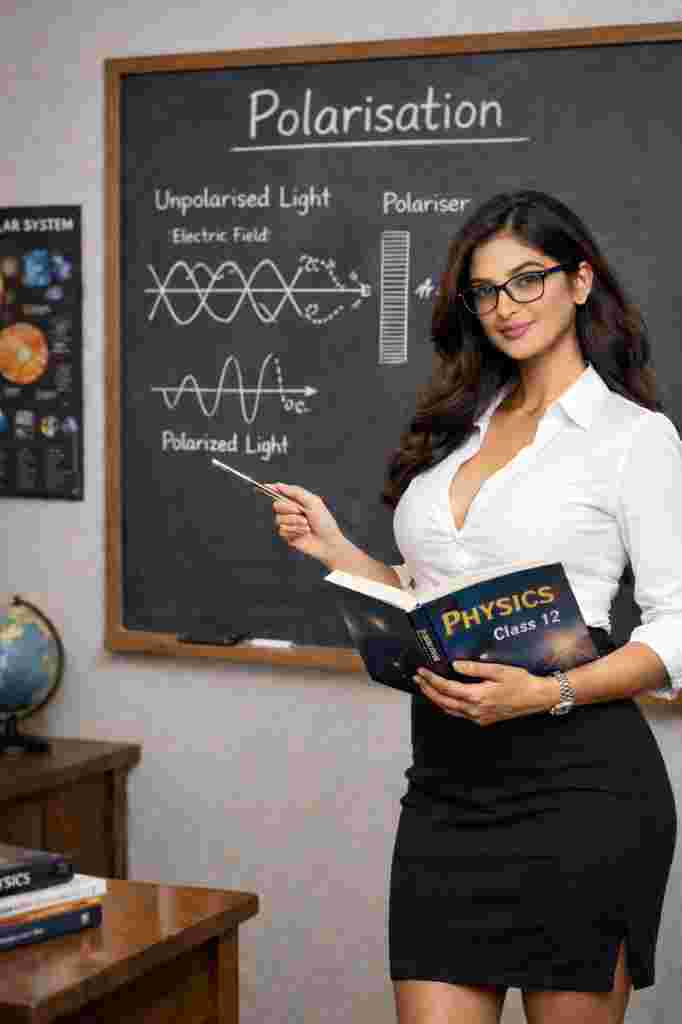
जब प्रकाश तरंग के कंपन (Vibrations) को एक ही दिशा में सीमित कर दिया जाता है, तो इस प्रक्रिया को Polarisation of light (ध्रुवण) कहते हैं।
How I Made My First ₹10,000 Online – Step-by-Step Guide (Real Beginner Story)
10 Proven Ways to Earn Money Online in 2026 (Beginner Friendly)
2️⃣ Light as a Transverse Wave
प्रकाश एक Electromagnetic Wave है जिसमें:
- Electric Field (E)
- Magnetic Field (B)
दोनों आपस में तथा तरंग की दिशा के लंबवत होते हैं।
Polarisation केवल Transverse Waves में संभव है।
3️⃣ Types of Light Based on Polarisation
(1) Unpolarised Light
जिसमें कंपन सभी दिशाओं में होते हैं।
(2) Plane Polarised Light
जिसमें कंपन केवल एक दिशा में सीमित होते हैं।
Diagram of Polarisation of light
4️⃣ Methods of Polarisation of light
- Reflection
- Refraction
- Double Refraction
- Selective Absorption
5️⃣ Polarisation by Reflection
जब प्रकाश एक विशेष कोण (Brewster Angle) पर परावर्तित होता है, तो वह पूर्ण रूप से ध्रुवित हो जाता है।
6️⃣ Brewster’s Law
[
\tan i_p = n
]
जहाँ
iₚ = Brewster Angle
n = Refractive Index
7️⃣ Polarizer और Analyzer
- Polarizer → Unpolarised Light को Polarised बनाता है।
- Analyzer → Polarised Light की जांच करता है।
8️⃣ Malus Law
यदि Polarised Light Analyzer से θ कोण पर गुजरती है:
[
I = I_0 \cos^2 \theta
]
जहाँ
I = Transmitted Intensity
I₀ = Initial Intensity
9️⃣ Double Refraction (द्विवर्तन)
कुछ क्रिस्टल (जैसे Calcite) में एक किरण दो किरणों में विभाजित हो जाती है:
- Ordinary Ray (O-ray)
- Extraordinary Ray (E-ray)
🔟 Nicol Prism
Plane Polarised Light प्राप्त करने के लिए प्रयोग किया जाता है।
1️⃣1️⃣ Applications of Polarisation
- Polarised Sunglasses
- Photography
- LCD Screens
- 3D Movies
- Stress Analysis
1️⃣2️⃣ Numerical Example (Malus Law)
यदि I₀ = 100 units
θ = 60°
[
I = 100 \cos^2 60°
]
[
= 100 × (1/2)^2
]
[
= 25 units
]
1️⃣3️⃣ Importance in UP Board
✔ Malus Law Derivation
✔ Brewster’s Law
✔ Double Refraction
✔ Diagram Practice
✔ Numerical Questions
25 Important FAQ (With Answers)
Q1. Polarisation क्या है?
Ans. कंपन को एक दिशा में सीमित करना।
Q2. Polarisation किस तरंग में संभव है?
Ans. Transverse Wave।
Q3. Unpolarised Light क्या है?
Ans. सभी दिशाओं में कंपन।
Q4. Plane Polarised Light क्या है?
Ans. एक दिशा में कंपन।
Q5. Brewster’s Law क्या है?
Ans. tan ip = n
Q6. Malus Law क्या है?
Ans. I = I₀ cos²θ
Q7. Polarizer क्या है?
Ans. Polarised Light बनाता है।
Q8. Analyzer क्या है?
Ans. जांच करता है।
Q9. Double Refraction क्या है?
Ans. दो किरणों में विभाजन।
Q10. Ordinary Ray क्या है?
Ans. सामान्य अपवर्तन।
Q11. Extraordinary Ray क्या है?
Ans. विशेष अपवर्तन।
Q12. Nicol Prism क्या है?
Ans. Polarised Light का स्रोत।
Q13. Polarised Sunglasses कैसे काम करते हैं?
Ans. Selective Absorption।
Q14. Polarisation of light क्या सिद्ध करता है?
Ans. Transverse Nature।
Q15. Intensity कब शून्य होगी?
Ans. θ = 90°
Q16. Brewster Angle क्या है?
Ans. पूर्ण ध्रुवण कोण।
Q17. Polarisation Reflection से संभव है?
Ans. हाँ।
Q18. LCD में उपयोग?
Ans. हाँ।
Q19. UP Board में कितने अंक?
Ans. 3–5 अंक।
Q20. Electromagnetic Wave क्या है?
Ans. E और B Field वाली तरंग।
Q21. θ = 0° पर Intensity?
Ans. Maximum।
Q22. θ = 90° पर Intensity?
Ans. Zero।
Q23. Double Refraction किसमें?
Ans. Calcite।
Q24. क्या Sound Polarise होता है?
Ans. नहीं।
Q25. Notes कहाँ मिलेंगे?
Ans. Gurugyanam.online
निष्कर्ष
आज हमने Gurugyanam.online के माध्यम से Polarisation of Light (प्रकाश का ध्रुवण) को विस्तार से समझा।
यदि आप Malus Law, Brewster’s Law और Double Refraction अच्छे से समझ लेते हैं, तो Wave Optics आपके लिए पूर्ण हो जाएगा।
📘 Diagram Practice करें
📘 Formula याद रखें
📘 Numerical Solve करें
अधिक UP Board Physics Notes के लिए Gurugyanam.online पर नियमित विजिट करें।