
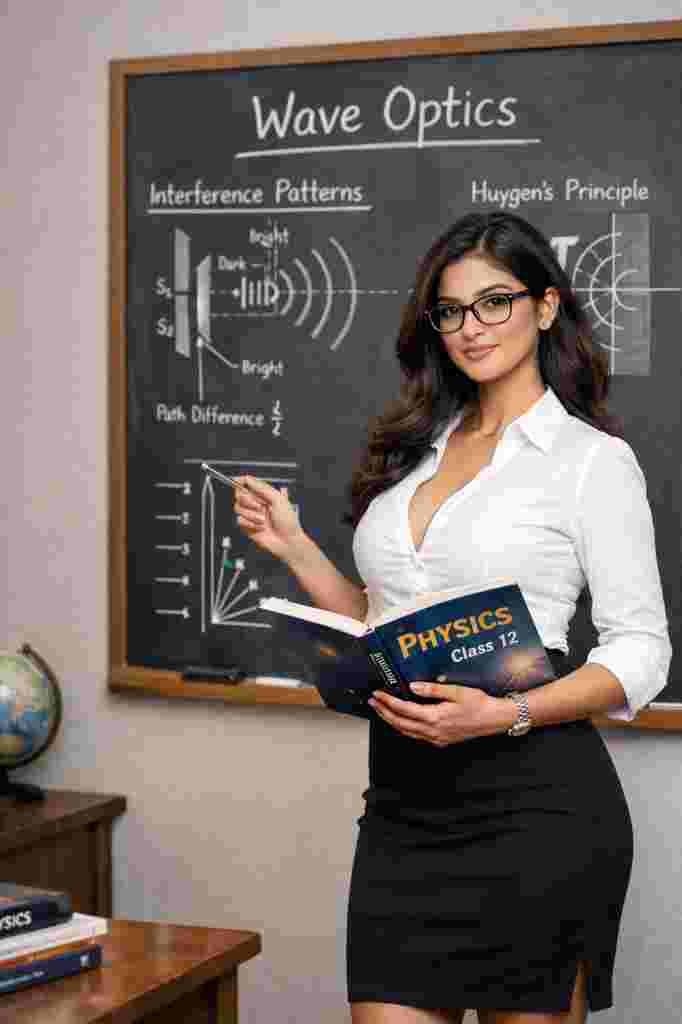
Class 12 UP Board Physics में Wave Optics (तरंग प्रकाशिकी) Ray Optics के बाद का अत्यंत महत्वपूर्ण अध्याय है। जहाँ Ray Optics प्रकाश को सीधी रेखा में चलने वाली किरण के रूप में समझाता है, वहीं Wave Optics प्रकाश के तरंग (Wave) स्वरूप को स्पष्ट करता है।
Wave Optics हमें समझाता है:
- प्रकाश तरंग क्यों है?
- Interference (व्यतिकरण) कैसे होता है?
- Young’s Double Slit Experiment क्या है?
- Diffraction (विवर्तन) क्या है?
- Polarization (ध्रुवण) क्या है?
बोर्ड परीक्षा में Wave Optics से 5–8 अंक तक के प्रश्न पूछे जाते हैं।
आज हम Gurugyanam.online के माध्यम से Wave Optics को पूरी गहराई से समझेंगे।
1️⃣ Nature of Light (प्रकाश का स्वरूप)
प्रकाश द्वैत प्रकृति (Dual Nature) दर्शाता है:
- Particle Nature (Photon)
- Wave Nature
Wave Optics प्रकाश के Wave Nature को समझाता है।
15 Powerful Work You Can Do Online to Earn Money
घर बैठे तुरंत शुरू होने वाली जॉब्स
2️⃣ Huygens’ Principle (ह्यूजेंस का सिद्धांत)
कथन
प्रत्येक वेवफ्रंट का प्रत्येक बिंदु द्वितीयक तरंगों (Secondary Wavelets) का स्रोत होता है।
वेवफ्रंट के प्रकार
- Plane Wavefront
- Spherical Wavefront
- Cylindrical Wavefront
3️⃣ Interference of Light (प्रकाश का व्यतिकरण)
जब दो समान आवृत्ति (Same Frequency) की तरंगें मिलती हैं, तो Interference होता है।
प्रकार
- Constructive Interference
- Destructive Interference
Conditions for Interference
- Same Frequency
- Same Phase
- Constant Phase Difference
4️⃣ Young’s Double Slit Experiment (YDSE)
Thomas Young ने 1801 में यह प्रयोग किया।
सिद्धांत
दो स्लिट से निकलने वाली coherent light तरंगें screen पर Bright और Dark fringes बनाती हैं।
Fringe Width (पट्टी चौड़ाई)
[
\beta = \frac{\lambda D}{d}
]
जहाँ
λ = Wavelength
D = Slit to Screen Distance
d = Slit Separation
5️⃣ Derivation of Fringe Width
Path Difference:
[
\Delta x = d \sin \theta
]
Bright Fringe:
[
d \sin \theta = n\lambda
]
छोटे कोण के लिए:
[
\beta = \frac{\lambda D}{d}
]
6️⃣ Diffraction (विवर्तन)
जब प्रकाश संकीर्ण छिद्र से गुजरता है तो फैल जाता है — इसे Diffraction कहते हैं।
Single Slit Diffraction
Central Maximum सबसे अधिक चमकीला होता है।
Condition for Minima:
[
a \sin \theta = n\lambda
]
7️⃣ Difference Between Interference and Diffraction
| Interference | Diffraction |
| Two Sources | Single Slit |
| Equal Fringes | Central Bright Wide |
| Sharp Pattern | Spread Pattern |
8️⃣ Polarization (ध्रुवण)
Polarization प्रकाश की Transverse Nature को सिद्ध करता है।
Malus Law
[
I = I_0 \cos^2 \theta
]
9️⃣ Coherent Sources
वे स्रोत जिनकी आवृत्ति और Phase Difference स्थिर हो।
🔟 Important Numerical Example
Example
λ = 500 nm
D = 2 m
d = 0.5 mm
[
\beta = \frac{500 \times 10^{-9} \times 2}{0.5 \times 10^{-3}}
]
[
\beta = 2 \times 10^{-3} m
]
[
\beta = 2 mm
]
1️⃣1️⃣ Applications of Wave Optics
- Thin Film Interference
- Anti-Reflection Coating
- Holography
- Optical Instruments
- Polarized Sunglasses
1️⃣2️⃣ Important Board Exam Topics
✔ Huygens Principle
✔ YDSE Derivation
✔ Fringe Width
✔ Diffraction Condition
✔ Malus Law
25 Important FAQ (With Answers)
Q1. Wave Optics क्या है?
Ans. प्रकाश के तरंग स्वरूप का अध्ययन।
Q2. Huygens Principle क्या है?
Ans. हर बिंदु Secondary Wavelets का स्रोत।
Q3. Interference क्या है?
Ans. दो तरंगों का मिलना।
Q4. Constructive Interference?
Ans. Bright Fringe।
Q5. Destructive Interference?
Ans. Dark Fringe।
Q6. Fringe Width Formula?
Ans. β = λD/d
Q7. Diffraction क्या है?
छिद्र से फैलना।
Q8. Polarization क्या है?
Ans. तरंग का एक दिशा में कंपन।
Q9. Malus Law?
Ans. I = I₀ cos²θ
Q10. Coherent Sources?
Ans. Same Frequency।
Q11. YDSE किसने किया?
Ans. Thomas Young।
Q12. Central Maximum कहाँ होता है?
Ans. Diffraction में।
Q13. Wavefront क्या है?
Ans. समान Phase वाले बिंदुओं का स्थान।
Q14. λ क्या है?
Ans. Wavelength।
Q15. β क्या है?
Ans. Fringe Width।
Q16. Interference में कितने स्रोत?
Ans. दो।
Q17. Diffraction में कितने स्रोत?
Ans. एक।
Q18. Polarization क्या सिद्ध करता है?
Ans. Transverse Nature।
Q19. Board में कितने अंक?
Ans. 5–8 अंक।
Q20. YDSE क्यों महत्वपूर्ण?
Ans. Wave Nature सिद्ध करता है।
Q21. Bright Fringe Condition?
Ans. d sinθ = nλ
Q22. Dark Fringe Condition?
Ans. d sinθ = (2n+1)λ/2
Q23. Diffraction Minima Condition?
Ans. a sinθ = nλ
Q24. Intensity का सूत्र?
Ans. Malus Law।
Q25. Notes कहाँ मिलेंगे?
Ans. Gurugyanam.online
निष्कर्ष
आज हमने Gurugyanam.online के माध्यम से Wave Optics (तरंग प्रकाशिकी) को पूरी तरह विस्तार से समझा।
यदि आप Huygens Principle, YDSE, Fringe Width, Diffraction और Polarization को अच्छे से समझ लेते हैं, तो Wave Optics आपके लिए आसान हो जाएगा।
📘 Diagram Practice करें
📘 Formula याद रखें
📘 Numerical Solve करें
अधिक UP Board Physics Notes के लिए Gurugyanam.online पर नियमित विजिट करें।