

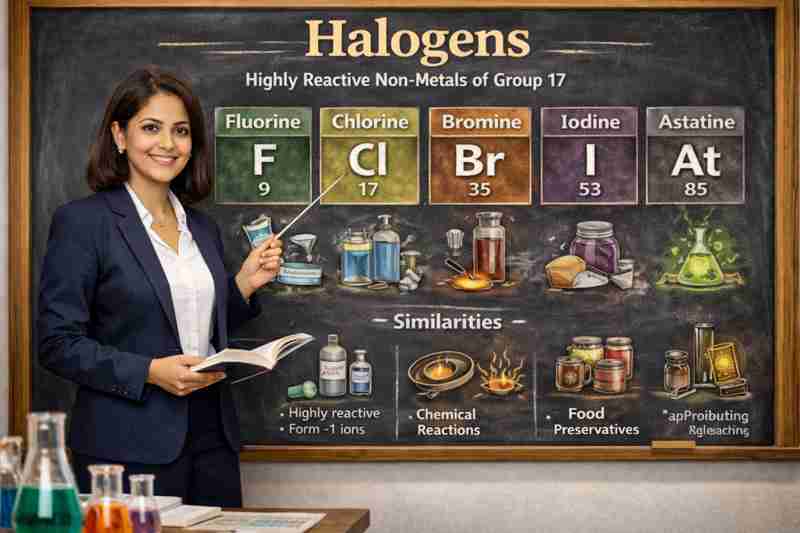
What is Halogens ? | हैलोजन क्या हैं?
Periodic Table के Group 17 के तत्वों को Halogens कहा जाता है। “Halogen” शब्द ग्रीक भाषा से लिया गया है —
👉 Halo = Salt
👉 Gen = Producer
अर्थात — Salt formers (नमक बनाने वाले तत्व)
📌 परिभाषा (Definition):
Periodic Table के Group 17 में आने वाले अत्यधिक reactive non-metal elements को Halogens कहा जाता है।
👉 ये धातुओं के साथ react करके salts बनाते हैं, जैसे —
✔ Sodium + Chlorine → Sodium Chloride (NaCl)
UP Board Chemistry में यह chapter अत्यंत महत्वपूर्ण और scoring माना जाता है।
👉 ऐसे ही सरल और exam-focused Chemistry notes पढ़ने के लिए विजिट करें:
✅ gurugyanam.online
What is Search Engine Optimization
What is Pinterest Marketing
Members of Halogen Family | हैलोजन परिवार के सदस्य
Group 17 के मुख्य तत्व:
👉 Fluorine (F)
👉 Chlorine (Cl)
👉 Bromine (Br)
👉 Iodine (I)
👉 Astatine (At)
✅ Physical State Trend:
| Element | State |
| Fluorine | Gas |
| Chlorine | Gas |
| Bromine | Liquid |
| Iodine | Solid |
📌 Trick:
Top → Gas | Middle → Liquid | Bottom → Solid
What is Halogens
Electronic Configuration | इलेक्ट्रॉनिक विन्यास
What is Halogens का general electronic configuration:
👉 ns² np⁵
इसका मतलब:
✔ Outer shell में 7 electrons
✔ Valency = 1
👉 इन्हें केवल 1 electron चाहिए stable बनने के लिए।
इसलिए ये highly reactive होते हैं।
Position in Periodic Table | आवर्त सारणी में स्थान
- Block → p-block
- Group → 17
- Period → 2 से 6
👉 Noble gases के ठीक पहले स्थित।
General Characteristics | सामान्य विशेषताएँ
⭐ Highly reactive non-metals
⭐ Strong oxidizing agents
⭐ Diatomic molecules (F₂, Cl₂)
⭐ Colored elements
⭐ High electronegativity
👉 Fluorine सबसे ज्यादा electronegative element है।
Physical Properties | भौतिक गुण
✅ Atomic Size
👉 Group में नीचे जाने पर atomic radius बढ़ता है।
✅ Melting & Boiling Points
Increase down the group।
👉 Reason:
Stronger van der Waals forces।
✅ Density
Increase down the group।
What is Halogens
✅ Color Trend
| Element | Color |
| Fluorine | Pale yellow |
| Chlorine | Greenish-yellow |
| Bromine | Reddish-brown |
| Iodine | Violet |
📌 Exam favorite table!
Chemical Properties | रासायनिक गुण
यह section सबसे important है।
✅ 1. High Reactivity | उच्च अभिक्रियाशीलता
Halogens आसानी से electron gain करते हैं।
👉 F सबसे reactive।
Reactivity Trend:
F > Cl > Br > I
📌 Down the group reactivity decreases।
✅ 2. Oxidation States | ऑक्सीकरण अवस्थाएँ**
👉 Most common = –1
लेकिन chlorine, bromine, iodine positive states भी दिखाते हैं:
✔ +1, +3, +5, +7
👉 Fluorine only –1 दिखाता है।
📌 Reason: Highest electronegativity।
✅ 3. Oxidizing Nature
Halogens strong oxidizing agents हैं।
👉 Electron accept करते हैं।
Example:
Cl₂ + 2Br⁻ → 2Cl⁻ + Br₂
📌 Displacement reaction — exam favorite!
Anomalous Behavior of Fluorine | फ्लोरीन का असामान्य व्यवहार
Fluorine बाकी halogens से अलग है।
Reasons:
✔ Small size
✔ Highest electronegativity
✔ No d-orbitals
Unique Properties:
✔ Only negative oxidation state
✔ Strongest oxidizer
✔ HF weak acid (unusual!)
📌 Competitive exams में पूछा जाता है।
Interhalogen Compounds | इंटरहैलोजन यौगिक
Different halogens आपस में react करते हैं।
👉 Formula types:
✔ XY
✔ XY₃
✔ XY₅
✔ XY₇
Examples:
✔ ClF
✔ BrF₃
✔ IF₇
👉 Highly reactive compounds।
What is Halogens
Hydrogen Halides | हाइड्रोजन हैलाइड्स
General formula:
👉 HX
| Compound | Nature |
| HF | Weak acid |
| HCl | Strong acid |
| HBr | Strong |
| HI | Strongest |
Trend:
✔ Acid strength ↑ down the group
✔ Bond strength ↓
📌 HF exception — strong bond।
Halogens with Metals | धातुओं के साथ अभिक्रिया
Halogens आसानी से metals के साथ salts बनाते हैं।
Example:
2Na + Cl₂ → 2NaCl
👉 Ionic compounds।
Halogens with Hydrogen | हाइड्रोजन के साथ अभिक्रिया
H₂ + Cl₂ → 2HCl
👉 Explosive reaction (light में)।
Oxides of Halogens | हैलोजन ऑक्साइड्स
Mostly acidic।
Example:
Cl₂O₇ → Strong acidic oxide।
Uses of Halogens | हैलोजन के उपयोग
✅ Fluorine
✔ Toothpaste
✔ Teflon
✅ Chlorine
✔ Water purification
✔ Bleaching powder
✔ Disinfectant
✅ Bromine
✔ Flame retardants
✔ Photography
✅ Iodine
✔ Antiseptic
✔ Thyroid medicine
👉 Daily life में huge importance।
Industrial Importance | औद्योगिक महत्व
✔ Plastics (PVC)
✔ Medicines
✔ Pesticides
✔ Refrigerants
👉 Chemical industry heavily dependent।
Biological Importance | जैविक महत्व
✔ Iodine → Thyroid hormone
✔ Chlorine → Digestion (HCl)
👉 Essential for health।
Environmental Impact | पर्यावरणीय प्रभाव
✔ CFCs → Ozone depletion
✔ Chlorine gas → Toxic
👉 Controlled usage जरूरी।
What is Halogens
Periodic Trends Summary | आवर्तीय प्रवृत्तियाँ
| Property | Trend |
| Atomic Size | ↑ |
| Electronegativity | ↓ |
| Reactivity | ↓ |
| Boiling Point | ↑ |
📌 Table याद करें।
What is Halogens
Exam Important Points | परीक्षा उपयोगी तथ्य
⭐ ns² np⁵ configuration
⭐ Most reactive → Fluorine
⭐ Only liquid → Bromine
⭐ Salt formers
⭐ Displacement reaction
👉 Direct questions बनते हैं।
What is Halogens
Common Mistakes Students Make | छात्रों की सामान्य गलतियाँ
❌ Reactivity trend उल्टा याद करना
❌ HF को strong acid मान लेना
❌ Fluorine oxidation states भूलना
👉 Concept clarity जरूरी है।
Why Students Must Study Halogens? | हैलोजन क्यों पढ़ें?
✔ Board exams में high weightage
✔ Easy trends
✔ Real-life examples
✔ High scoring
👉 Smart preparation का हिस्सा।
Conclusion | निष्कर्ष
Halogens periodic table के सबसे reactive non-metals में से हैं। Salt formation से लेकर water purification तक — इनका योगदान हर जगह है।
UP Board students को trends, reactions और compounds जरूर याद रखने चाहिए। What is Halogens chapter conceptual और scoring दोनों है।
👉 ऐसे ही सरल और exam-focused Chemistry notes पढ़ने के लिए विजिट करें:
✅ gurugyanam.online
FAQs – What is Halogens (Group 17 Elements / हैलोजन)
Q1. Halogens किस group में हैं?
Ans. Group 17।
Q2. Electronic configuration?
Ans. ns² np⁵।
Q 3. Most reactive halogen?
Ans. Fluorine।
Q4. Only liquid halogen?
Ans. Bromine।
Q 5. Salt former कौन?
Ans. Halogens।
Q6. Oxidation state?
Ans. –1।
Q7. HF weak क्यों?
Ans. Strong bond।
Q8. Chlorine का use?
Ans. Water purification।
Q9. Iodine किसके लिए जरूरी?
Ans. Thyroid।
Q10. Reactivity trend?
Ans. Decreases down।
Q11. Interhalogen क्या हैं?
Ans. Halogen compounds।
Q12. Acid strength trend?
Ans. Increase down।
Q13. Fluorine special क्यों?
Ans. Highest electronegativity।
Q14. Halogens molecules कैसे?
Ans. Diatomic।
Q15. Oxidizing nature?
Ans. Strong।
Q 16. PVC किससे बनता है?
Ans. Chlorine।
Q 17. Displacement reaction क्या है?
Ans. More reactive replaces less reactive।
Q18. CFC नुकसान?
Ans. Ozone depletion।
Q 19. Color trend?
Ans. Darker down।
Q 20. Easy chapter है?
Ans. हाँ, scoring।
👉 ऐसे ही सरल और exam-focused Chemistry notes पढ़ने के लिए विजिट करें:
✅ gurugyanam.online