
What is Nitrogen Family ? | नाइट्रोजन परिवार क्या है?
Periodic Table का Group 15 “Nitrogen Family” कहलाता है। इस समूह का पहला तत्व Nitrogen है, इसलिए इसे Nitrogen family कहा जाता है। Chemistry में इन तत्वों का विशेष महत्व है क्योंकि ये जीवन (Life) से लेकर उद्योग (Industry) तक हर क्षेत्र में उपयोगी हैं।
📌 परिभाषा (Definition):
Periodic Table के Group 15 में आने वाले तत्वों को Nitrogen Family या Pnictogens कहा जाता है।
👉 “Pnictogen” शब्द का अर्थ है — दम घोंटने वाला, क्योंकि nitrogen gas अधिक मात्रा में oxygen को dilute कर सकती है।
👉 ऐसे ही सरल और exam-focused Chemistry notes पढ़ने के लिए विजिट करें:
✅ gurugyanam.online
What is Twitter Marketing
Social Media Optimization
Members of Nitrogen Family | नाइट्रोजन परिवार के सदस्य
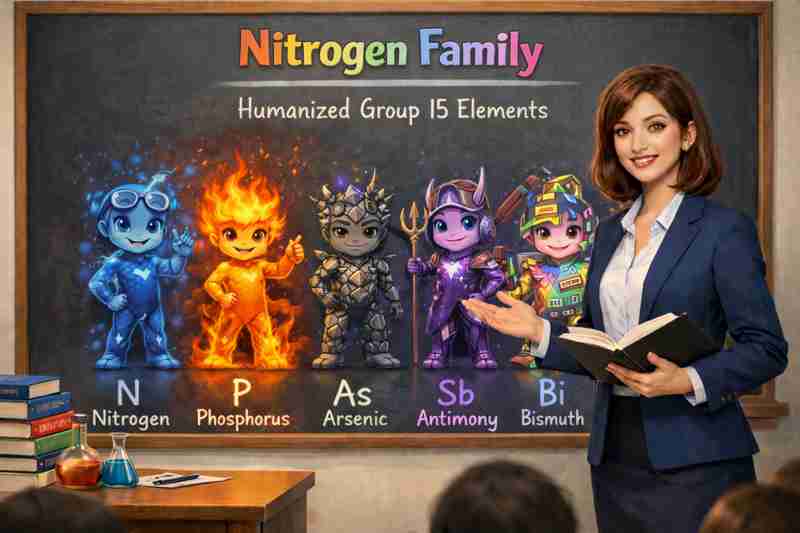
इस समूह में पाँच मुख्य तत्व शामिल हैं:
👉 Nitrogen (N)
👉 Phosphorus (P)
👉 Arsenic (As)
👉 Antimony (Sb)
👉 Bismuth (Bi)
Classification:
✔ Nitrogen, Phosphorus → Non-metals
✔ Arsenic, Antimony → Metalloids
✔ Bismuth → Metal
👉 यह variation इस group को खास बनाता है।
📌 Exam Tip:
Top → Non-metal | Bottom → Metal
Electronic Configuration | इलेक्ट्रॉनिक विन्यास
Nitrogen family का general electronic configuration है:
👉 ns² np³
इसका मतलब:
✔ Outer shell में 5 electrons
✔ Valency = 3 या 5
👉 इसलिए ये elements आसानी से covalent bonds बनाते हैं।
What is Nitrogen Family
Position in Periodic Table | आवर्त सारणी में स्थान
- Block → p-block
- Group → 15
- Period → 2 से 6
👉 p-block के मध्य में होने के कारण इनकी properties balanced होती हैं।
General Characteristics | सामान्य विशेषताएँ
⭐ पाँच valence electrons
⭐ Covalent bonding tendency
⭐ Multiple oxidation states
⭐ Allotropy (विशेषकर phosphorus)
⭐ Hydrides और oxides बनाते हैं
👉 Nitrogen family chemistry का foundation मानी जाती है।
Physical Properties | भौतिक गुण
✅ Atomic Size (परमाणु आकार)
👉 Group में नीचे जाने पर atomic radius बढ़ता है।
Reason:
New shells add होते हैं।
✅ Melting and Boiling Points
Generally increase down the group।
👉 Nitrogen gas है, जबकि bismuth solid metal।
✅ Density
Increase down the group।
Chemical Properties | रासायनिक गुण
अब इस chapter का सबसे महत्वपूर्ण हिस्सा — chemical behavior।
✅ 1. Oxidation States | ऑक्सीकरण अवस्थाएँ
Nitrogen family के elements कई oxidation states दिखाते हैं:
👉 –3, +3, +5
Examples:
✔ NH₃ → –3
✔ HNO₃ → +5
📌 Down the group +3 state ज्यादा stable हो जाती है।
👉 इसका कारण है Inert Pair Effect।
✅ 2. Inert Pair Effect | निष्क्रिय युग्म प्रभाव**
Heavy elements में ns² electrons bonding में भाग नहीं लेते।
👉 Result: +5 state unstable और +3 stable।
📌 Exam favorite concept!
✅ 3. Electronegativity
👉 Down the group decrease होती है।
Nitrogen सबसे ज्यादा electronegative है।
✅ 4. Metallic Character
👉 Increase होता है।
Nitrogen → Non-metal
Bismuth → Metal
Anomalous Behavior of Nitrogen | नाइट्रोजन का असामान्य व्यवहार
Nitrogen group के बाकी elements से अलग behavior दिखाता है।
Reasons:
✔ Small atomic size
✔ High electronegativity
✔ No d-orbitals
What is Nitrogen Family
Unique Properties:
✔ N₂ में triple bond
✔ High ionization energy
✔ Catenation कम
📌 Competitive exams में पूछा जाता है।
What is Nitrogen Family
Allotropy in Nitrogen Family | अपरूपता
✅ Phosphorus Allotropes
✔ White Phosphorus
- Highly reactive
- Poisonous
- Glow करता है (Chemiluminescence)
✔ Red Phosphorus
- Stable
- Safety matches में उपयोग
✔ Black Phosphorus
- Graphite जैसा structure
- Conductive
📌 Exam favorite topic!
Hydrides of Nitrogen Family | हाइड्राइड्स
General formula:
👉 EH₃
| Element What is Nitrogen Family | Hydride |
| Nitrogen | NH₃ |
| Phosphorus | PH₃ |
Trend:
✔ Stability ↓ down the group
✔ Basicity ↓
👉 NH₃ सबसे stable और basic है।
Oxides of Nitrogen Family | ऑक्साइड्स
Elements कई oxides बनाते हैं।
Nitrogen Oxides:
✔ N₂O
✔ NO₂
✔ N₂O₅
👉 Mostly acidic।
What is Nitrogen Family
Bismuth Oxide:
More basic nature।
📌 Trend:
Acidic → Basic (Down the group)
Important Compounds | महत्वपूर्ण यौगिक
✅ Ammonia (NH₃)
Preparation:
👉 Haber Process
N₂ + 3H₂ → 2NH₃
Uses:
✔ Fertilizers
✔ Refrigeration
✔ Cleaning agents
👉 Agriculture की backbone।
✅ Nitric Acid (HNO₃)
Uses:
✔ Explosives
✔ Fertilizers
✔ Dyes
👉 Industrial importance बहुत ज्यादा।
✅ Phosphine (PH₃)
✔ Toxic gas
✔ Pest control
What is Nitrogen Family
Catenation | श्रृंखलन
Atoms का खुद से bond बनाना।
👉 Nitrogen में कम
👉 Phosphorus में ज्यादा
📌 Reason: Bond strength।
Diagonal Relationship | विकर्ण संबंध
Nitrogen lithium से similarity दिखाता है।
👉 Small size
👉 High charge density
📌 Advanced concept — competitive exams में आता है।
Industrial Importance | औद्योगिक महत्व
✔ Fertilizers (NH₃)
✔ Matchsticks (Phosphorus)
✔ Alloys (Bismuth)
✔ Semiconductors (Arsenic)
👉 Modern industry heavily dependent।
Biological Importance | जैविक महत्व
Nitrogen life का essential element है।
✔ Proteins
✔ DNA
✔ Amino acids
👉 Without nitrogen — no life!
Environmental Impact | पर्यावरणीय प्रभाव
✔ Nitrogen oxides → Air pollution
✔ Fertilizers → Water pollution
👉 Sustainable usage जरूरी है।
Periodic Trends Summary | आवर्तीय प्रवृत्तियों का सार
| Property | Trend |
| Atomic Size | ↑ |
| Electronegativity | ↓ |
| Metallic Character | ↑ |
| Basicity | ↓ |
📌 Table याद करें।
Exam Important Points | परीक्षा उपयोगी तथ्य
⭐ ns² np³ configuration
⭐ Oxidation states –3, +3, +5
⭐ Haber process
⭐ Inert pair effect
⭐ Phosphorus allotropy
👉 Direct questions बनते हैं।
Why Students Must Study Nitrogen Family? | यह टॉपिक क्यों जरूरी है?
✔ Board exams में high weightage
✔ Conceptual clarity
✔ Easy scoring
✔ Real-life connection
👉 Smart students इसे master करते हैं।
What is Nitrogen Family
Conclusion | निष्कर्ष
What is Nitrogen Family chemistry का एक अत्यंत महत्वपूर्ण समूह है, जो जीवन, agriculture और industry तीनों का आधार है।
UP Board students को trends, compounds और oxidation states जरूर याद रखने चाहिए।What is Nitrogen Family chapter conceptual और scoring दोनों है।
👉 ऐसे ही सरल और exam-focused Chemistry notes पढ़ने के लिए विजिट करें:
✅ gurugyanam.online
FAQs – What is Nitrogen Family (Group 15 Elements)
Q 1. Nitrogen family किस group में है?
Ans. Group 15।
Q2. Electronic configuration?
Ans. ns² np³।
Q 3. Members कितने हैं?
Ans. पाँच।
Q 4. Valence electrons?
Ans. 5
Q 5. Oxidation states?
Ans. –3, +3, +5।
Q6. Haber process किसके लिए?
Ans. Ammonia।
Q 7. NH₃ basic है?
Ans. हाँ।
Q8. Metallic character trend?
Ans. Ans. Increase।
Q 9. Electronegativity trend?
Ans. Decrease।
Q10. Inert pair effect क्या है?
Ans. ns electrons inactive।
Q11. Phosphorus allotropes?
Ans. White, Red, Black।
Q12. Nitrogen special क्यों?
Ans. Small size।
Q13. Hydride formula?
Ans. Ans. EH₃।
Q 14. Acidic oxides कौन बनाता है?
Ans. Nitrogen।
Q 15. Life के लिए जरूरी?
Ans. हाँ।
Q 16. Fertilizers किससे?
Ans. Ammonia।
Q 17. PH₃ क्या है?
Ans. Phosphine।
Q18. Catenation किसमें ज्यादा?
Ans. Phosphorus।
Q19. Group name और क्या है?
Ans. Pnictogens।
Q 20. Easy chapter है?
👉 ऐसे ही सरल और exam-focused Chemistry notes पढ़ने के लिए विजिट करें:
✅ gurugyanam.online
Ans. हाँ, scoring।