
What are p-Block Elements? | p-ब्लॉक तत्व क्या हैं?
Periodic Table को चार blocks में बांटा गया है — s, p, d और f। इनमें से p-Block Elements वे तत्व होते हैं जिनके valence shell का आखिरी electron p-orbital में प्रवेश करता है।
📌 परिभाषा (Definition):
वे तत्व जिनका अंतिम इलेक्ट्रॉन p-orbital में जाता है, p-block elements कहलाते हैं।
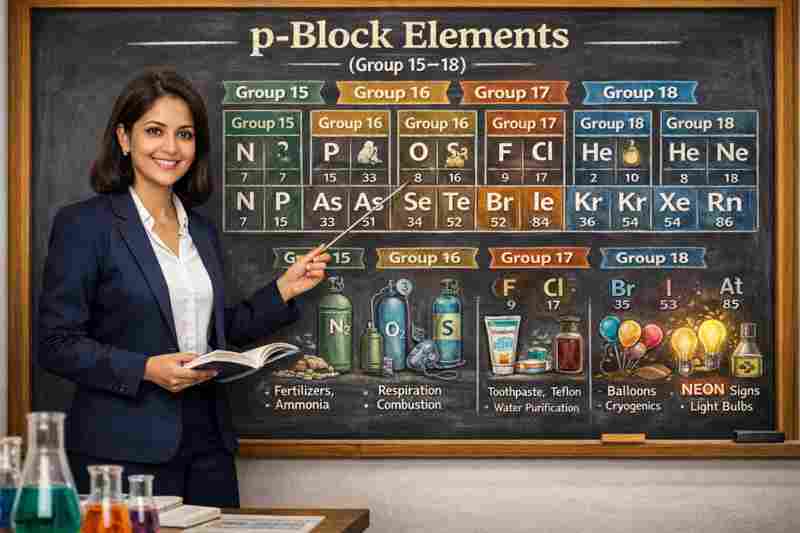
👉 ये periodic table के Group 13 से 18 तक पाए जाते हैं, लेकिन इस chapter में हम खासतौर पर Group 15–18 पर ध्यान देंगे।
👉 p-block elements बहुत diverse होते हैं — इनमें metals, non-metals और metalloids सभी शामिल हैं।
📌 Exam Tip:
p-block = Right side of periodic table
👉 ऐसे ही सरल और exam-focused Chemistry notes पढ़ने के लिए विजिट करें:
✅ gurugyanam.online
What is Website Designing
What is Twitter Marketing
What are p-Block Elements
General Electronic Configuration | सामान्य इलेक्ट्रॉनिक विन्यास
👉 p-block elements का configuration:
ns² np¹–⁶
इसका मतलब:
✔ Outer shell में 3 से 8 electrons
✔ Chemical bonding में high participation
👉 इसलिए ये elements बहुत reactive और versatile होते हैं।
What are p-Block Elements
Key Characteristics of p-Block Elements | p-ब्लॉक तत्वों की मुख्य विशेषताएँ
⭐ Metals, non-metals और metalloids तीनों शामिल
⭐ Covalent bonding tendency
⭐ Variable oxidation states
⭐ Allotropy दिखाई देती है
⭐ Acidic और basic oxides बनाते हैं
👉 Chemistry का बड़ा हिस्सा इन्हीं पर आधारित है।
Group 15 Elements – Nitrogen Family | समूह 15 – नाइट्रोजन परिवार
Members:
👉 Nitrogen (N), Phosphorus (P), Arsenic (As), Antimony (Sb), Bismuth (Bi)
✅ Electronic Configuration
ns² np³
👉 5 valence electrons।
What are p-Block Elements
✅ Important Properties
✔ Atomic Size
Top से bottom जाने पर size बढ़ता है।
✔ Electronegativity
Decrease होती है।
✔ Metallic Character
Increase होता है।
👉 Nitrogen non-metal है, जबकि Bismuth metal है।
✅ Oxidation States
👉 –3, +3, +5
Nitrogen कई oxidation states दिखाता है।
📌 Example: NH₃, HNO₃
What are p-Block Elements
✅ Important Compounds
Ammonia (NH₃)
✔ Fertilizers
✔ Refrigerant
Nitric Acid (HNO₃)
✔ Explosives
✔ Dyes
✅ Allotropy in Phosphorus
✔ White phosphorus
✔ Red phosphorus
✔ Black phosphorus
📌 Exam favorite topic!
Group 16 Elements – Oxygen Family (Chalcogens) | समूह 16 – ऑक्सीजन परिवार
Members:
Oxygen, Sulfur, Selenium, Tellurium, Polonium
✅ Electronic Configuration
ns² np⁴
👉 6 valence electrons।
✅ Properties
✔ High electronegativity
✔ Strong tendency to form oxides
✔ Hydrides बनाते हैं
✅ Oxidation States
👉 –2, +2, +4, +6
Oxygen mostly –2 दिखाता है।
✅ Important Compounds
Water (H₂O)
👉 Life का आधार।
Sulfuric Acid (H₂SO₄)
👉 “King of Chemicals”
✔ Fertilizers
✔ Petroleum refining
📌 Industrial importance बहुत ज्यादा।
Group 17 Elements – Halogens | समूह 17 – हैलोजन
Members:
Fluorine, Chlorine, Bromine, Iodine, Astatine
✅ Electronic Configuration
ns² np⁵
👉 7 valence electrons।
What are p-Block Elements
✅ Why Called Halogens?
“Halogen” = Salt former
👉 Metals के साथ react करके salts बनाते हैं।
Example: NaCl
✅ Properties
✔ Highly reactive
✔ Strong oxidizing agents
✔ Diatomic molecules
👉 Fluorine सबसे reactive element है।
✅ Trends
✔ Reactivity ↓ down the group
✔ Atomic size ↑
✅ Uses
Chlorine:
✔ Water purification
✔ Bleaching powder
Iodine:
✔ Antiseptic
📌 Daily life connection!
Group 18 Elements – Noble Gases | समूह 18 – निष्क्रिय गैसें
Members:
Helium, Neon, Argon, Krypton, Xenon, Radon
✅ Electronic Configuration
ns² np⁶
👉 Complete octet → Stable
✅ Why Called Noble?
क्योंकि ये react नहीं करते।
👉 Earlier called Inert Gases
✅ Properties
✔ Colorless
✔ Odorless
✔ Monoatomic
✔ Very low reactivity
✅ Uses
Helium:
✔ Balloons
✔ Cryogenics
Neon:
✔ Advertising lights
Argon:
✔ Electric bulbs
Periodic Trends in Groups 15–18 | आवर्तीय प्रवृत्तियाँ
Atomic Size:
👉 Down the group ↑
Ionization Energy:
👉 Decreases
Metallic Character:
👉 Increases
Electronegativity:
👉 Decreases
📌 Trend-based questions exam में common हैं।
Anomalous Behavior | असामान्य व्यवहार
First elements अलग behavior दिखाते हैं।
👉 Nitrogen vs Phosphorus
👉 Oxygen vs Sulfur
Reason:
✔ Small size
✔ High electronegativity
✔ No d-orbitals
📌 Very important concept!
Oxidation States and Inert Pair Effect | निष्क्रिय युग्म प्रभाव
Heavy elements में s-electrons bond नहीं करते।
👉 इसे Inert Pair Effect कहते हैं।
Result:
+3 state stable हो जाती है।
Industrial Importance | औद्योगिक महत्व
✔ Fertilizers (Ammonia)
✔ Acids (H₂SO₄, HNO₃)
✔ Disinfectants
✔ Lighting gases
✔ Medical oxygen
👉 Modern industry p-block पर निर्भर है।
Environmental Impact | पर्यावरणीय प्रभाव
✔ Nitrogen oxides → Pollution
✔ Chlorofluorocarbons → Ozone depletion
👉 Sustainable chemistry जरूरी है।
Exam Important Points | परीक्षा उपयोगी तथ्य
⭐ ns² np¹–⁶ configuration
⭐ Halogens → Salt formers
⭐ Noble gases → Stable
⭐ H₂SO₄ → King of chemicals
⭐ Fluorine → Most reactive
👉 Direct questions बनते हैं।
Why Students Must Study p-Block? | p-ब्लॉक क्यों पढ़ें?
✔ Board exams में heavy weightage
✔ Conceptual chapter
✔ Easy scoring
✔ Real-life applications
👉 Smart students इसे master करते हैं।
Conclusion | निष्कर्ष
p-Block Elements chemistry का एक विशाल और महत्वपूर्ण भाग हैं। Nitrogen से लेकर Noble gases तक — ये elements life, industry और environment तीनों में अहम भूमिका निभाते हैं।
UP Board students को trends, oxidation states और compounds जरूर याद रखने चाहिए। यह chapter conceptual + scoring है।
👉 ऐसे ही सरल और exam-focused Chemistry notes पढ़ने के लिए विजिट करें:
✅ gurugyanam.online
FAQs – What are p-Block Elements (Group 15–18)
Q 1. p-block elements क्या हैं?
Ans. जिनका last electron p-orbital में जाता है।
Q 2. Groups कौन से हैं?
Ans. 13–18।
Q3. Nitrogen किस group में?
Ans. 15।
Q4. Halogens क्या हैं?
Ans. Salt-forming elements।
Q 5. Noble gases reactive हैं?
Ans. नहीं।
Q 6. Electronic configuration?
Ans. ns² np¹–⁶।
Q 7. Fluorine कैसा है?
Ans. Most reactive।
Q8. H₂SO₄ क्यों famous?
Ans. King of chemicals।
Q9. Ammonia का use?
Ans. Fertilizers।
Q 10. Chlorine का use?
Ans. Water purification।
Q11. Atomic size trend?
Ans. Down the group increases।
Q 12. Ionization energy?
Ans. Decreases।
Q13. Inert pair effect क्या है?
Ans. s-electrons inactive।
Q14. Oxygen family नाम?
Ans. Chalcogens।
Q15. Halogen example?
Ans. Chlorine।
Q 16. Noble gas example?
Ans. Neon।
Q17. Metallic character?
Ans. Increases down the group।
Q 18. Nitrogen oxidation state?
Ans. –3 to +5।
Q19. p-block क्यों important?
Ans. Industrial uses।
Q20. Easy chapter है?
Ans. हाँ, scoring।
👉 ऐसे ही सरल और exam-focused Chemistry notes पढ़ने के लिए विजिट करें:
✅ gurugyanam.online