
What is Refining of Metals ? | धातुओं का शुद्धिकरण क्या है?
What is Refining of Metalsमें जब हम अयस्क (Ore) से धातु निकालते हैं, तो वह पूरी तरह शुद्ध (Pure) नहीं होती। उसमें कई प्रकार की अशुद्धियाँ (Impurities) मिल जाती हैं। इन अशुद्धियों को हटाकर धातु को अधिक शुद्ध बनाने की प्रक्रिया को Refining (शुद्धिकरण) कहा जाता है।
📌 परिभाषा (Definition):
अशुद्ध धातु से unwanted पदार्थों को हटाकर उसे शुद्ध धातु में बदलने की प्रक्रिया को Refining कहते हैं।
👉 सरल शब्दों में:
Impure metal → Pure metal = Refining
UP Board Chemistry में यह metallurgy का अंतिम और अत्यंत महत्वपूर्ण चरण है।
👉 ऐसे ही सरल और exam-focused Chemistry notes पढ़ने के लिए विजिट करें:
✅ gurugyanam.online
What is YouTube Marketing
WordPress Website Design
Why is Refining Important? | शुद्धिकरण क्यों जरूरी है?
कल्पना करें कि यदि धातुएँ शुद्ध न हों —
❌ Electrical wires सही काम नहीं करेंगे
❌ Machines जल्दी खराब होंगी
❌ Jewellery की quality खराब होगी
❌ Electronics fail हो सकते हैं
👉 इसलिए refining industrial quality control का essential हिस्सा है।
✅ मुख्य उद्देश्य:
✔ Metal purity बढ़ाना
✔ Strength सुधारना
✔ Conductivity बढ़ाना
✔ Corrosion कम करना
📌 Exam Tip:
Extraction gives metal, refining gives quality.
What is Refining of Metals
Levels of Metal Purity | धातु की शुद्धता के स्तर
Different industries को अलग purity चाहिए।
| Industry | Required Purity |
| Construction | Medium |
| Electrical | Very High |
| Semiconductor | Ultra Pure |
👉 Silicon को लगभग 99.9999% pure बनाया जाता है!
Methods of Refining | धातु शुद्धिकरण की विधियाँ
अब हम metallurgy की सबसे महत्वपूर्ण refining techniques को विस्तार से समझते हैं।
What is Refining of Metals
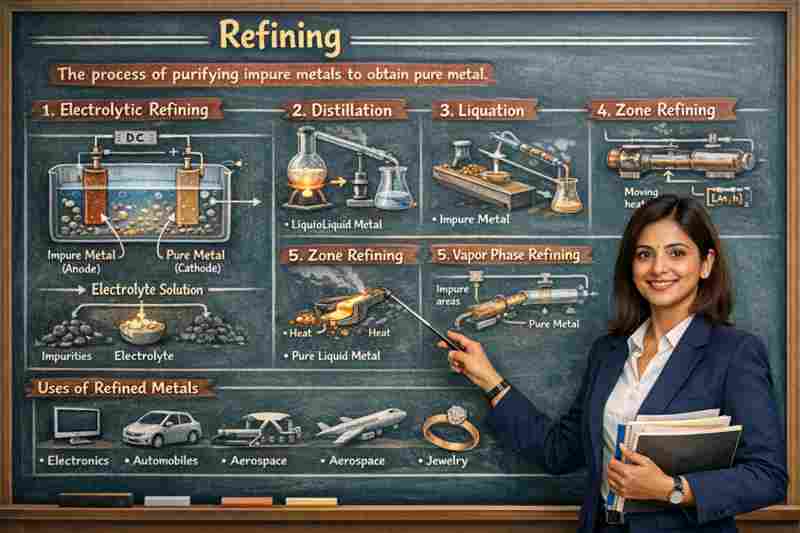
1. Distillation (आसवन विधि)
यह method low boiling point वाली धातुओं के लिए उपयोग होती है।
✅ Principle:
Impure metal को गर्म किया जाता है।
👉 Metal vapor बन जाता है और impurities पीछे रह जाती हैं।
फिर vapor को cool करके pure metal प्राप्त होता है।
Examples:
✔ Zinc
✔ Mercury
Advantages:
✔ Simple
✔ Effective
Limitation:
❌ High boiling metals के लिए नहीं।
What is Refining of Metals
2. Liquation (द्रवीकरण विधि)
यह method low melting metals के लिए है।
✅ Principle:
Metal को melting point से थोड़ा ऊपर गर्म किया जाता है।
👉 Pure metal melt होकर बह जाता है, impurities पीछे रह जाती हैं।
Examples:
✔ Tin
✔ Lead
✔ Bismuth
📌 Exam favorite method!
3. Electrolytic Refining (विद्युत अपघटन द्वारा शुद्धिकरण)
यह सबसे महत्वपूर्ण और widely used method है।
✅ Principle:
Electrolysis का उपयोग करके pure metal deposit किया जाता है।
Setup:
✔ Anode: Impure metal
✔ Cathode: Thin sheet of pure metal
✔ Electrolyte: Metal salt solution
Process:
- Current pass किया जाता है
- Pure metal cathode पर जमा होता है
- Impurities नीचे गिरकर Anode Mud बनाती हैं
Example: Copper Refining
👉 Anode: Impure copper
👉 Cathode: Pure copper
Reaction:
Cu²⁺ + 2e⁻ → Cu (Pure)
📌 Anode mud में gold और silver मिल सकते हैं!
👉 इसलिए यह process economically भी beneficial है।
4. Zone Refining (क्षेत्रीय शुद्धिकरण)
यह ultra-pure metals के लिए उपयोग होती है।
✅ Principle:
Impurities molten zone में concentrate हो जाती हैं।
Process:
- Metal rod को धीरे-धीरे heat किया जाता है
- Molten zone आगे बढ़ता है
- Impurities end में जमा हो जाती हैं
Example:
✔ Silicon
✔ Germanium
👉 Electronics industry की backbone।
5. Poling (पोलिंग विधि)
यह method molten metal से oxide impurities हटाने के लिए है।
Process:
- Molten metal में green wood poles डाले जाते हैं
- Gases impurities को reduce करती हैं
Example:
✔ Copper
✔ Tin
6. Chromatographic Method (क्रोमैटोग्राफी)
Rare metals के purification में उपयोग।
👉 Adsorption principle पर आधारित।
What is Refining of Metals
7. Vapour Phase Refining (वाष्प अवस्था शुद्धिकरण)
इसमें metal volatile compound बनाता है।
फिर decomposition से pure metal मिलता है।
Example: Mond Process (Nickel)
Ni + CO → Ni(CO)₄
Ni(CO)₄ → Ni + CO
👉 Extremely pure nickel!
Example: Van Arkel Method
Titanium और zirconium purification।
📌 Competitive exams में important।
What is Refining of Metals
Comparison of Refining Methods | विधियों की तुलना
| Method | Principle | Metal |
| Distillation | Boiling point | Zinc |
| Liquation | Melting point | Tin |
| Electrolysis | Electric current | Copper |
| Zone refining | Impurity migration | Silicon |
| Vapour phase | Volatile compound | Nickel |
Advantages of Refining | शुद्धिकरण के फायदे
✔ High purity
✔ Better conductivity
✔ Strong metals
✔ Industrial reliability
✔ Longer lifespan
Disadvantages | नुकसान
❌ Expensive equipment
❌ High energy use
❌ Technical expertise required
👉 लेकिन benefits ज्यादा हैं।
Industrial Importance | औद्योगिक महत्व
Refined metals के बिना modern technology असंभव है।
✔ Mobile phones
✔ Computers
✔ Cars
✔ Aircraft
✔ Medical devices
👉 Refining = Quality assurance।
Environmental Impact | पर्यावरणीय प्रभाव
कुछ refining methods pollution कर सकते हैं।
❌ Chemical waste
❌ Toxic gases
Solutions:
✔ Recycling
✔ Green refining
✔ Waste treatment
Exam Important Points | परीक्षा उपयोगी तथ्य
⭐ Electrolytic refining → Most important
⭐ Anode mud contains precious metals
⭐ Zone refining → Semiconductors
⭐ Mond process → Nickel
⭐ Liquation → Low melting metals
👉 ये questions बार-बार आते हैं।
Common Mistakes Students Make | छात्रों की सामान्य गलतियाँ
❌ Distillation vs liquation confuse करना
❌ Anode–cathode उल्टा याद करना
❌ Mond process भूलना
👉 Concept समझें — याद अपने आप होगा।
Why Students Must Learn Refining? | शुद्धिकरण क्यों पढ़ें?
✔ Metallurgy का final step
✔ Board exams में repeated
✔ Easy to memorize
✔ High scoring
👉 Smart preparation का हिस्सा।
Future of Metal Refining | धातु शुद्धिकरण का भविष्य
✔ Green metallurgy
✔ AI-based purification
✔ Low-energy electrolysis
✔ Recycling metals
👉 Sustainable industry की दिशा।
Conclusion | निष्कर्ष
Refining धातुकर्म की अंतिम लेकिन सबसे महत्वपूर्ण प्रक्रिया है, जो धातुओं को industrial-grade quality प्रदान करती है।
UP Board students को electrolytic refining, zone refining और vapour phase methods जरूर याद रखने चाहिए। यह chapter conceptual, practical और scoring है।
👉 ऐसे ही सरल और exam-focused Chemistry notes पढ़ने के लिए विजिट करें:
✅ gurugyanam.online
FAQs – What is Refining of Metals (धातुओं का शुद्धिकरण)
Q1. Refining क्या है?
Ans. Impure metal को pure बनाना।
Q2. Most important method?
Ans. Electrolytic refining।
Q 3. Anode क्या होता है?
Ans. Impure metal।
Q4. Cathode क्या होता है?
Ans. Pure metal sheet।
Q 5. Anode mud क्या है?
Ans. Impurities।
Q 6. Distillation किसके लिए?
Ans. Low boiling metals।
Q7. Liquation किसके लिए?
Ans. Low melting metals।
Q8. Zone refining कहाँ उपयोग?
Ans. Semiconductors।
Q 9. Mond process किसके लिए?
Ans. Nickel।
Q10. Vapour phase refining क्या है?
Ans. Volatile compound method।
Q11. Poling क्या करता है?
Ans. Oxide हटाता है।
Q12. Silicon क्यों ultra pure चाहिए?
Ans. Electronics।
Q13. Electrolyte क्या होता है?
Ans. Metal salt solution।
Q 14. Current क्यों pass करते हैं?
Ans. etal deposit के लिए।
Q 15. Refining क्यों जरूरी?
Ans. Quality improve।
Q 16. High purity का फायदा?
Better conductivity।
Q 17. Chromatography कहाँ?
Ans. Rare metals।
Q18. Recycling क्यों जरूरी?
Ans. Pollution कम।
Q19. Metallurgy का last step?
Ans. Refining।
Q20. Easy chapter है?
Ans. हाँ, scoring।
👉 ऐसे ही सरल और exam-focused Chemistry notes पढ़ने के लिए विजिट करें:
✅ gurugyanam.online










[…] What is Refining of Metals (धातुओं का शुद्धिकरण) […]