

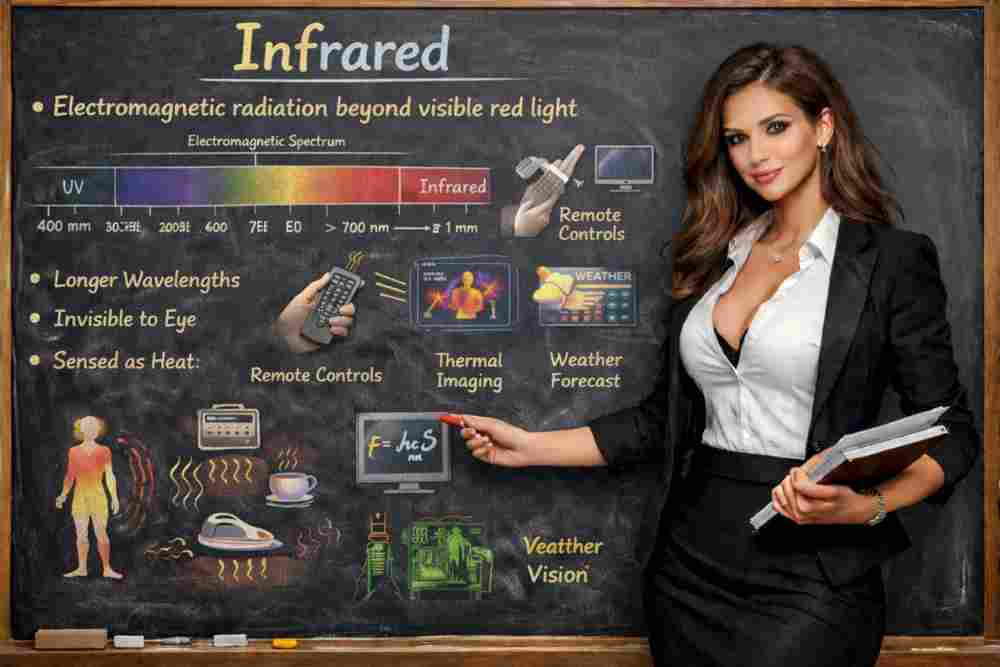
What are Infrared Waves ? | अवरक्त तरंगें क्या हैं?
Physics में What are Infrared Waves (IR Waves) विद्युतचुंबकीय तरंगों का वह भाग हैं जिनकी wavelength visible light से बड़ी लेकिन microwaves से छोटी होती है। इन्हें आम भाषा में Heat Waves (ऊष्मा तरंगें) भी कहा जाता है क्योंकि हम इनकी ऊर्जा को गर्मी के रूप में महसूस कर सकते हैं।
📌 परिभाषा (Definition):
What are Infrared Waves
Visible light के लाल (Red) रंग से आगे मौजूद और गर्मी उत्पन्न करने वाली विद्युतचुंबकीय तरंगों को Infrared Waves कहा जाता है।
👉 “Infra” का अर्थ होता है नीचे, यानी लाल रंग की frequency से नीचे।
UP Board Physics में यह topic बहुत महत्वपूर्ण है क्योंकि यह theory और real-life दोनों से जुड़ा हुआ है।
👉 ऐसे ही सरल और exam-focused Physics notes पढ़ने के लिए विजिट करें:
✅ gurugyanam.online
What is Media Planning
What is Local Business Listing
Discovery of Infrared Waves | अवरक्त तरंगों की खोज
Infrared waves की खोज William Herschel ने 1800 में की।
Experiment Summary:
उन्होंने prism से sunlight को अलग-अलग रंगों में बांटा और thermometer से तापमान मापा।
👉 उन्हें सबसे ज्यादा तापमान लाल रंग के बाद मिला — जहाँ कोई visible light नहीं थी।
📌 निष्कर्ष:
वहाँ invisible radiation मौजूद थी → Infrared!
Position in Electromagnetic Spectrum | स्पेक्ट्रम में स्थान
Electromagnetic spectrum का क्रम:
👉 Radio → Microwave → Infrared → Visible → Ultraviolet → X-ray → Gamma
📌 इसका मतलब:
✔ Frequency → Microwaves से ज्यादा
✔ Energy → Visible light से कम
✔ Wavelength → Visible light से ज्यादा
What are Infrared Waves
Wavelength and Frequency | तरंगदैर्घ्य और आवृत्ति
✅ Wavelength:
👉 लगभग 700 nm से 1 mm
✅ Frequency:
👉 लगभग 300 GHz से 430 THz
📌 महत्वपूर्ण सूत्र:
👉 c = νλ
जहाँ —
✔ c = प्रकाश की गति
✔ ν = frequency
✔ λ = wavelength
👉 Frequency बढ़े → Wavelength घटे।
यह numerical questions का favorite formula है।
How Infrared Waves are Produced? | अवरक्त तरंगें कैसे उत्पन्न होती हैं?
Infrared waves मुख्य रूप से hot objects द्वारा emit होती हैं।
Examples:
✔ Sun
✔ Fire
✔ Heater
✔ Human body
✔ Electric bulb
👉 जितनी ज्यादा temperature, उतनी ज्यादा IR radiation।
📌 Exam Tip:
Every hot object emits infrared radiation.
What are Infrared Waves
Properties of Infrared Waves | अवरक्त तरंगों के गुण
✅ 1. Invisible to Human Eye
What are Infrared Waves
हम इन्हें देख नहीं सकते लेकिन महसूस कर सकते हैं।
✅ 2. Heat Producing
इनकी सबसे बड़ी पहचान — गर्मी।
✅ 3. Travel at Speed of Light
👉 3×10⁸ m/s
✅ 4. Do Not Need Medium
Vacuum में भी travel करती हैं।
✅ 5. Reflection and Refraction
Light की तरह behavior।
✅ 6. Strong Absorption by Water Vapor
इसलिए weather studies में उपयोग।
Types of Infrared Waves | अवरक्त तरंगों के प्रकार
Infrared को तीन भागों में बांटा जाता है:
✅ 1. Near Infrared (निकट अवरक्त)
- Visible light के सबसे करीब
- Fiber optics और sensors में उपयोग
✅ 2. Mid Infrared (मध्य अवरक्त)
- Heat detection
- Spectroscopy
✅ 3. Far Infrared (दूर अवरक्त)
- Thermal imaging
- Astronomy
📌 Exam में classification पूछा जा सकता है।
Infrared and Heat | अवरक्त तरंगें और ऊष्मा
जब infrared waves किसी वस्तु से टकराती हैं:
👉 Molecules vibrate करने लगते हैं
👉 Temperature बढ़ता है
इसलिए IR heaters बहुत efficient होते हैं।
Applications of Infrared Waves | अवरक्त तरंगों के उपयोग
Infrared technology आज हर जगह मौजूद है।
✅ 1. Remote Controls
TV, AC, set-top box — सभी IR signals से चलते हैं।
👉 Button दबाते ही signal receiver तक जाता है।
✅ 2. Thermal Imaging
✔ Night vision cameras
✔ Fire detection
✔ Military surveillance
👉 Darkness में भी objects detect।
✅ 3. Medical Field
✔ Physiotherapy
✔ Muscle pain relief
✔ Blood circulation improve
✅ 4. Weather Forecasting
Satellites infrared images से clouds analyze करते हैं।
✅ 5. Astronomy
Infrared telescopes dust clouds के पार देख सकते हैं।
👉 Hidden stars detect होते हैं।
✅ 6. Security Systems
✔ Motion detectors
✔ Intruder alarms
✅ 7. Fiber Optic Communication
Near infrared data transmission में उपयोग।
👉 High-speed internet संभव।
Advantages of Infrared Waves | फायदे
✔ Heat detection possible
✔ Night vision
✔ Wireless control
✔ Medical benefits
✔ Energy efficient heating
Disadvantages | नुकसान
❌ Long exposure → skin burn
❌ Eye damage risk
❌ Limited range
❌ Obstacles block कर सकते हैं
👉 Controlled use जरूरी है।
Infrared vs Visible Light | अंतर
| Basis | Infrared | Visible Light |
| Visibility | Invisible | Visible |
| Heat | High | Less |
| Wavelength | Longer | Shorter |
| Uses | Thermal imaging | Vision |
Exam Important Points | परीक्षा उपयोगी तथ्य
⭐ Discovered by William Herschel
⭐ Heat waves कहलाती हैं
⭐ Invisible होती हैं
⭐ Produced by hot objects
⭐ Speed = 3×10⁸ m/s
⭐ Used in remote controls
👉 ये facts अक्सर exam में आते हैं।
Are Infrared Waves Dangerous? | क्या अवरक्त तरंगें खतरनाक हैं?
Infrared non-ionizing radiation हैं।
👉 इसका मतलब:
✔ DNA damage नहीं
✔ Nuclear radiation जैसी खतरनाक नहीं
लेकिन:
⚠ Excess exposure → burns।
Future of Infrared Technology | अवरक्त तकनीक का भविष्य
Future innovations:
✔ Smart sensors
✔ Autonomous vehicles
✔ Advanced medical imaging
✔ Space exploration
✔ AI-based surveillance
👉 Infrared technology तेजी से विकसित हो रही है।
Why Infrared is Important? | अवरक्त तरंगें क्यों महत्वपूर्ण हैं?
सोचिए अगर infrared न हों:
❌ Remote काम नहीं करेंगे
❌ Night vision नहीं होगा
❌ Weather forecasting मुश्किल
❌ Thermal cameras नहीं
👉 Modern science का बड़ा हिस्सा IR पर निर्भर है।
What are Infrared Waves
Conclusion | निष्कर्ष
What are Infrared Waves invisible होते हुए भी हमारी daily life में बहुत बड़ा योगदान देती हैं। Communication, healthcare, astronomy और security — हर क्षेत्र में इनका उपयोग है।
UP Board students को discovery, wavelength range, properties और uses जरूर याद रखने चाहिए। यह chapter आसान और scoring दोनों है।
👉 ऐसे ही सरल और exam-focused Physics notes पढ़ने के लिए विजिट करें:
✅ gurugyanam.online
FAQs – What are Infrared Waves (अवरक्त तरंगें
Q1. What are Infrared Waves ?
Ans. Heat producing electromagnetic waves।
Q2. खोज किसने की?
Ans. William Herschel।
Q3. Visible हैं?
Ans. नहीं।
Q 4. Speed कितनी होती है?
Ans. 3×10⁸ m/s
Q 5. Produced by?
Ans. Hot objects।
Q6. Remote किस पर काम करता है?
Ans. Infrared।
Q 7. Thermal imaging क्या है?
Ans. Heat detection technology।
Q8. क्या medium चाहिए?
Ans. नहीं।
Q9. Infrared किससे बड़ी है?
Ans. Visible light।
Q 10. Heat क्यों पैदा करती हैं?
Ans. Molecular vibration।
Q11. Medical use?
Ans. Physiotherapy।
Q12. Night vision कैसे possible?
Ans. Infrared sensors।
Q13. Safe हैं?
Ans. Controlled use में हाँ।
Q 14. Radiation type?
Ans. Non-ionizing।
Q15. Weather forecasting में role?
Ans. Cloud analysis।
Q16. Fiber optics में use?
Ans. Near infrared।
Q17. Formula relation?
Ans. c = νλ
Q18. Infrared telescope क्या करता है?
Ans. Hidden stars detect।
Q19. Biggest advantage?
Ans. Heat detection।
Q 20. Modern tech क्यों dependent है?
Ans. Sensors और imaging के कारण।
What are Infrared Waves
👉 ऐसे ही सरल और exam-focused Physics notes पढ़ने के लिए विजिट करें:
✅ gurugyanam.online










[…] What are Infrared Waves (अवरक्त तरंगें) […]
[…] What are Infrared Waves (अवरक्त तरंगें) […]