

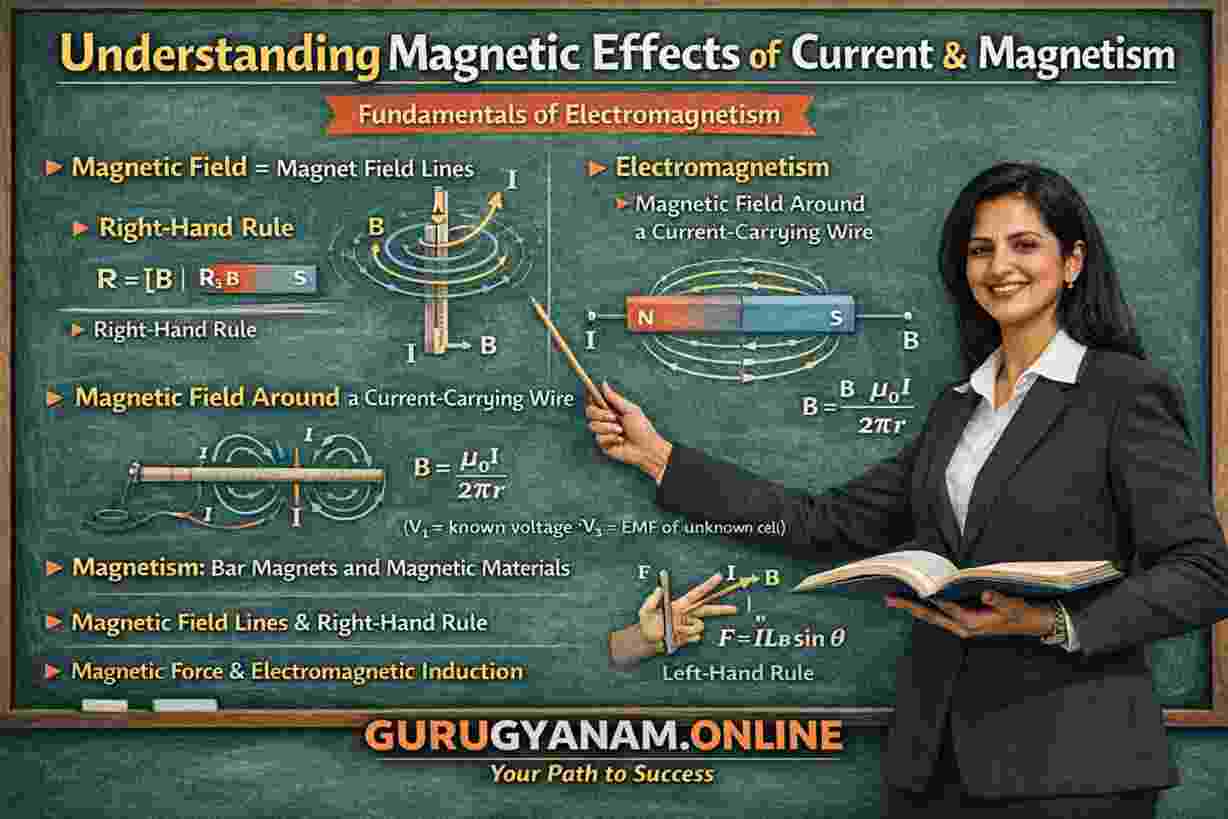
Class 12 Physics का अध्याय Magnetic Effects of Current Magnetism विद्युत (Electricity) और चुंबकत्व (Magnetism) के बीच के गहरे संबंध को समझाता है।
यह chapter न केवल theory-based है, बल्कि इसमें rules, derivations, numericals और applications सभी शामिल हैं।
UP Board की परीक्षाओं में इस अध्याय से:
- Magnetic field की परिभाषा
- Right hand thumb rule, Fleming’s rules
- Force on current carrying conductor
- Solenoid, electromagnet
- Numericals और reasoning questions
हर साल पूछे जाते हैं।
👉 gurugyanam.online का उद्देश्य है कि इस chapter को classroom-style explanation, आसान भाषा और daily-life examples के साथ पढ़ाया जाए ताकि यह topic scoring बन सके।
🧲 Magnetism क्या है?
Magnetism पदार्थ का वह गुण है जिसके कारण वह:
- लोहे, निकेल, कोबाल्ट जैसे पदार्थों को आकर्षित करता है
- अपने आसपास चुंबकीय प्रभाव उत्पन्न करता है
जिस क्षेत्र में चुंबक का प्रभाव अनुभव किया जाता है, उसे Magnetic Field कहते हैं।
⚡ Magnetic Effects of Current Magnetism क्या है?
जब किसी चालक (conductor) में विद्युत धारा (electric current) प्रवाहित होती है, तो उसके चारों ओर चुंबकीय क्षेत्र (magnetic field) उत्पन्न हो जाता है।
इसी phenomenon को Magnetic Effect of Current कहते हैं।
📌 यह खोज बताती है कि Electricity और Magnetism आपस में जुड़े हुए हैं।
Magnetic Effects of Current Magnetism
🧠 Daily Life से जुड़ा उदाहरण
- Electric fan
- Motor
- Generator
- Loudspeaker
- MRI machine
इन सभी में current और magnetism का संयुक्त प्रभाव काम करता है।
Magnetic Effects of Current Magnetism
🧲 Magnetic Field (चुंबकीय क्षेत्र)
📘 परिभाषा:
“चुंबक या धारा वहन करने वाले चालक के चारों ओर का वह क्षेत्र, जहाँ चुंबकीय बल का अनुभव किया जा सके, चुंबकीय क्षेत्र कहलाता है।”
Magnetic field को B से दर्शाते हैं।
Unit:
- Tesla (T)
- Magnetic Effects of Current Magnetism
🧲 Magnetic Field Lines (चुंबकीय क्षेत्र रेखाएँ)
Magnetic field को दर्शाने के लिए field lines का उपयोग किया जाता है।
विशेषताएँ:
- ये काल्पनिक रेखाएँ होती हैं
- North pole से निकलकर South pole में प्रवेश करती हैं
- कभी एक-दूसरे को काटती नहीं हैं
- जहाँ रेखाएँ घनी हों → field मजबूत
- Magnetic Effects of Current Magnetism
⚡ Current Carrying Conductor के चारों ओर Magnetic Field
जब किसी सीधे तार में current बहती है, तो उसके चारों ओर concentric circular magnetic field lines बनती हैं।
✋ Right Hand Thumb Rule (दायाँ हाथ अंगूठा नियम)
Rule:
यदि:
- दाएँ हाथ का अंगूठा current की दिशा में रखें
- उँगलियाँ मोड़ें
तो:
👉 उँगलियों की घुमाव की दिशा magnetic field की दिशा बताती है।
📌 यह rule magnetic field की direction जानने के लिए बहुत उपयोगी है।
🧲 Magnetic Field due to Circular Coil
यदि current को:
- गोल कुंडली (circular coil) से प्रवाहित किया जाए
तो:
- कुंडली के केंद्र पर magnetic field मजबूत होता है
- कुंडली जितनी अधिक turns की होगी, field उतनी अधिक होगी
- Magnetic Effects of Current Magnetism
🌀 Solenoid और उसका Magnetic Field
Solenoid क्या है?
“लंबी बेलनाकार कुंडली, जिसमें कई turns हों, solenoid कहलाती है।”
Solenoid के गुण:
- इसके अंदर magnetic field लगभग uniform होती है
- यह bar magnet की तरह व्यवहार करता है
- Magnetic Effects of Current Magnetism
🧲 Electromagnet
जब:
- Soft iron core को
- Solenoid के अंदर रखा जाता है
तो वह Electromagnet बन जाता है।
विशेषताएँ:
- Magnetic strength current पर निर्भर
- Current बंद करते ही magnetism खत्म
👉 Electric cranes, relays, bells में प्रयोग।
⚡ Force on a Current Carrying Conductor
जब:
- कोई current carrying conductor
- किसी magnetic field में रखा जाता है
तो उस पर चुंबकीय बल (magnetic force) कार्य करता है।
Formula:
[
F = BIL \sin \theta
]
जहाँ:
- B = Magnetic field
- I = Current
- L = Length of conductor
- θ = Angle between I और B
✋ Fleming’s Left Hand Rule (बायाँ हाथ नियम)
Rule:
यदि बाएँ हाथ की:
- पहली उँगली → Magnetic field
- अंगूठा → Force
- मध्य उँगली → Current
तीनों परस्पर लम्बवत हों,
तो अंगूठा conductor की गति की दिशा बताता है।
📌 यह rule Electric Motor के लिए उपयोगी है।
Magnetic Effects of Current Magnetism
🔄 Electric Motor (संक्षेप में)
Electric motor वह यंत्र है जो:
- Electrical energy → Mechanical energy में बदलता है
Motor का principle आधारित है:
👉 Current carrying conductor in magnetic field experiences force
Magnetic Effects of Current Magnetism
🧲 Magnetism in Matter (पदार्थों में चुंबकत्व)
पदार्थों को चुंबकीय गुणों के आधार पर तीन भागों में बाँटा जाता है:
1️⃣ Diamagnetic
- Weakly repelled
- Example: Copper, Bismuth
2️⃣ Paramagnetic
- Weakly attracted
- Example: Aluminium
3️⃣ Ferromagnetic
- Strongly attracted
- Example: Iron, Cobalt
🧠 Earth’s Magnetism (पृथ्वी का चुंबकत्व)
पृथ्वी एक विशाल चुंबक की तरह व्यवहार करती है।
Magnetic elements:
- Magnetic declination
- Magnetic inclination (dip)
- Horizontal component
📌 Compass पृथ्वी के magnetic field के कारण काम करता है।
Magnetic Effects of Current Magnetism
🔥 Applications of Magnetic Effects of Current
- Electric motor
- Generator
- Transformer
- Magnetic levitation
- Medical imaging (MRI)
👉 आधुनिक technology का आधार यही chapter है।
✍️ Exam Oriented Tips (UP Board)
✔️ Rules (Right hand, Fleming’s) diagram सहित लिखें
✔️ Definitions बिल्कुल textbook जैसी लिखें
✔️ Solenoid और electromagnet में अंतर याद रखें
✔️ Formula के साथ units जरूर लिखें
✔️ Numericals में given-required-solution format अपनाएँ
Magnetic Effects of Current Magnetism
👉 gurugyanam.online पर UP Board pattern के अनुसार MCQs, numericals और diagram practice sheets उपलब्ध हैं।
Q1. Magnetic effect of current क्या है?
Ans: Current से magnetic field उत्पन्न होना।
Q2. Magnetic field क्या है?
Ans: चुंबकीय प्रभाव का क्षेत्र।
Q3. Magnetic field की unit क्या है?
Ans: Tesla।
Q4. Right hand thumb rule क्यों उपयोगी है?
Ans: Magnetic field की दिशा जानने के लिए।
Q5. Solenoid क्या है?
Ans: लंबी बेलनाकार कुंडली।
Q6. Solenoid bar magnet जैसा क्यों होता है?
Ans: समान magnetic field distribution के कारण।
Q7. Electromagnet क्या है?
Ans: Current से बना चुंबक।
Q8. Permanent magnet और electromagnet में अंतर?
Ans: Current dependency।
Q9. Fleming’s left hand rule किसके लिए है?
Ans: Motor के लिए।
Q10. Magnetic force का formula क्या है?
Ans: F = BIL sinθ
Q11. Motor किस principle पर काम करता है?
Ans: Magnetic force on current carrying conductor।
Q12. Magnetic field lines क्यों नहीं काटतीं?
Ans: Direction ambiguity के कारण।
Q13. Ferromagnetic पदार्थ क्या हैं?
Ans: Strongly attracted पदार्थ।
Q14. Paramagnetic पदार्थ का उदाहरण?
Ans: Aluminium।
Q15. Diamagnetic पदार्थ क्या हैं?
Ans: Weakly repelled पदार्थ।
Q16. Earth को magnet क्यों कहते हैं?
Ans: इसके magnetic field के कारण।
Q17. Compass कैसे काम करता है?
Ans: Earth’s magnetic field से।
Q18. Current बढ़ाने से magnetic field पर क्या प्रभाव?
Ans: Field बढ़ता है।
Q19. Solenoid में turns बढ़ाने से क्या होगा?
Ans: Magnetic field बढ़ेगा।
Q20. Magnetic effect कहाँ उपयोगी है?
Ans: Motors, generators में।
Q21. Magnetic field की direction कैसे ज्ञात करें?
Ans: Right hand thumb rule से।
Q22. Motor में left hand rule क्यों जरूरी है?
Ans: Force की दिशा जानने के लिए।
Q23. Magnetic effects chapter क्यों महत्वपूर्ण है?
Ans: Modern technology का आधार।
Q24. Magnetic effect numericals आते हैं?
Ans: हाँ, UP Board में।
Q25. Magnetic Effects of Current पढ़ने का best source?
Ans: gurugyanam.online










[…] […]
[…] […]