

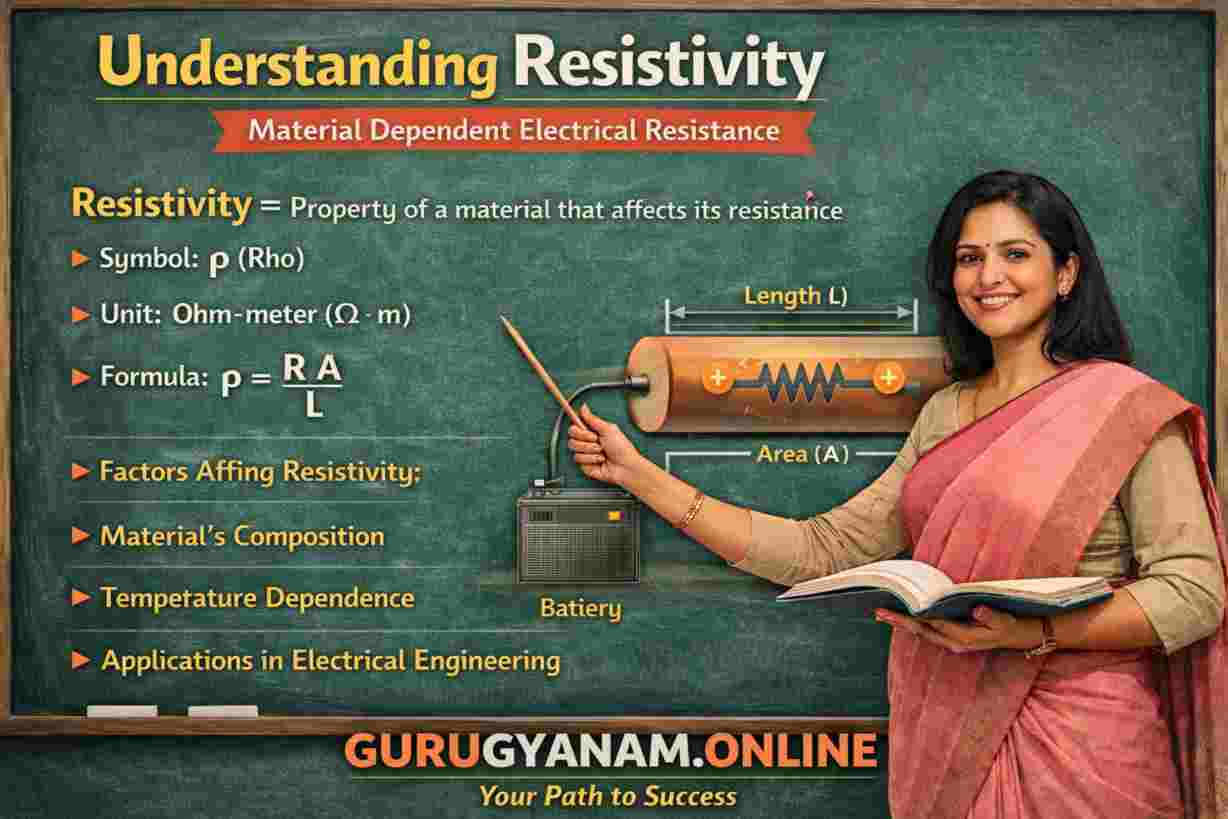
Class 12 Physics के Current Electricity अध्याय में Resistivity (विशिष्ट प्रतिरोध) एक ऐसा concept है जो Resistance को गहराई से समझने में मदद करता है।
बहुत-से छात्र resistance और resistivity को एक-सा समझ लेते हैं, जबकि दोनों में मौलिक अंतर है।
UP Board की परीक्षाओं में resistivity से:
- परिभाषा आधारित प्रश्न
- सूत्र आधारित numericals
- Temperature effect
- Conductors, semiconductors और insulators की तुलना
लगभग हर साल प्रश्न पूछे जाते हैं।
👉 gurugyanam.online का उद्देश्य है कि Resistivity को केवल formula न बनाकर, real-life से जोड़कर और classroom-style explanation में समझाया जाए।
📘 Resistivity क्या है?
विशिष्ट प्रतिरोध (ρ) किसी पदार्थ का वह आंतरिक (intrinsic) गुण है, जो यह बताता है कि वह पदार्थ विद्युत धारा के प्रवाह का कितना विरोध करता है।
📌 परिभाषा:
“किसी पदार्थ के 1 मीटर लंबाई और 1 वर्ग मीटर अनुप्रस्थ क्षेत्रफल वाले चालक का प्रतिरोध, उस पदार्थ की विशिष्ट प्रतिरोध कहलाता है।”
🧠 सरल भाषा में समझें
Resistance यह बताता है कि एक खास तार current को कितना रोकता है,
जबकि विशिष्ट प्रतिरोध यह बताती है कि वह पदार्थ खुद कैसा है।
👉 मतलब:
- Resistance → wire की लंबाई और मोटाई पर निर्भर
- विशिष्ट प्रतिरोध→ केवल पदार्थ की प्रकृति पर निर्भर
⚡ विशिष्ट प्रतिरोध का Symbol और Unit
- Symbol → ρ (rho)
- SI Unit → Ohm-meter (Ω m)
📌 Unit याद रखना बहुत जरूरी है, क्योंकि numericals में अक्सर गलती यहीं होती है।
🔋 Resistance और विशिष्ट प्रतिरोध का संबंध
Resistance (R) और विशिष्ट प्रतिरोध (ρ) के बीच संबंध:
[
R = \rho \frac{l}{A}
]
जहाँ,
- (R) = Resistance
- (ρ) = Resistivity
- (l) = Length of conductor
- (A) = Cross-sectional area
👉 यही formula resistivity chapter की backbone है।
🧠 Concept को एक उदाहरण से समझें
मान लीजिए:
- दो तार हैं
- लंबाई और मोटाई समान है
लेकिन:
- एक तांबे (Copper) का है
- दूसरा लोहे (Iron) का
👉 दोनों का resistance अलग-अलग होगा,
क्योंकि उनकी विशिष्ट प्रतिरोध अलग-अलग है।
🧱 विशिष्ट प्रतिरोध किन पर निर्भर करती है?
विशिष्ट प्रतिरोध मुख्यतः इन बातों पर निर्भर करती है:
1️⃣ Nature of Material (पदार्थ की प्रकृति)
हर पदार्थ की विशिष्ट प्रतिरोध अलग होती है।
| पदार्थ | विशिष्ट प्रतिरोध |
| Silver | बहुत कम |
| Copper | कम |
| Iron | अधिक |
| Rubber | बहुत अधिक |
👉 इसी कारण silver और copper अच्छे conductor होते हैं।
2️⃣ Temperature (तापमान)
विशिष्ट प्रतिरोध temperature पर निर्भर करती है।
- Metals → Temperature बढ़ने पर विशिष्ट प्रतिरोध बढ़ती है
- Semiconductors → Temperature बढ़ने पर विशिष्ट प्रतिरोध घटती है
🔥 Temperature और विशिष्ट प्रतिरोध का संबंध
Metals के लिए:
[
\rho_T = \rho_0 (1 + \alpha T)
]
जहाँ,
- (ρ_T) = T तापमान पर resistivity
- (ρ_0) = 0°C पर resistivity
- α = Temperature coefficient
📌 यही कारण है कि bulb filament गर्म होने पर ज्यादा resistance दिखाता है।
⚙️ विशिष्ट प्रतिरोधकिन पर निर्भर नहीं करती?
बहुत महत्वपूर्ण point (exam favourite):
👉 Resistivity इन पर निर्भर नहीं करती:
- Length of wire
- Area of cross-section
- Shape of conductor
क्योंकि यह पदार्थ का intrinsic property है।
🔌 Conductors, Semiconductors और Insulators
Resistivity के आधार पर पदार्थों को तीन भागों में बाँटा जाता है:
🟢 Conductors (चालक)
- Resistivity बहुत कम
- Current आसानी से flow करता है
उदाहरण:
Copper, Silver, Aluminium
🟡 Semiconductors (अर्धचालक)
- विशिष्ट प्रतिरोध मध्यम
- Temperature बढ़ने पर विशिष्ट प्रतिरोध घटती है
उदाहरण:
Silicon, Germanium
🔴 Insulators (कुचालक)
- Resistivity बहुत अधिक
- Current flow लगभग नहीं होता
उदाहरण:
Rubber, Glass, Plastic
🧠 Resistivity और Microscopic Explanation
Microscopic level पर resistivity इस पर निर्भर करती है:
- Free electrons की संख्या
- Lattice vibration
- Electron collisions
👉 अधिक collision → अधिक resistivity
🔋 Resistivity और Current Electricity
Ohm’s law:
[
V = IR
]
और:
[
R = \rho \frac{l}{A}
]
👉 इन दोनों को जोड़कर current electricity के numericals solve किए जाते हैं।
🔥 Heating Effect और Resistivity
Joule’s law:
[
H = I^2Rt
]
👉 High resistivity वाले पदार्थ:
- ज्यादा heat उत्पन्न करते हैं
इसी कारण:
- Nichrome heater में उपयोग होता है
- क्योंकि इसकी resistivity ज्यादा है
🧪 Resistivity और Alloy
Alloys (मिश्र धातु):
- Generally high resistivity
- Temperature coefficient कम
उदाहरण:
Nichrome, Constantan
👉 इसलिए alloys electrical appliances में उपयोगी होते हैं।
🧠 विशिष्ट प्रतिरोध in Daily Life
- Electric wiring में copper
- Heating elements में nichrome
- Insulation के लिए rubber/plastic
हर जगह विशिष्ट प्रतिरोध का concept काम करता है।
🔢 Numericals based on विशिष्ट प्रतिरोध(Concept)
Example:
यदि
ρ = 1.7 × 10⁻⁸ Ωm
l = 2 m
A = 1 mm²
तो,
[
R = \rho \frac{l}{A}
]
👉 Step-by-step solution लिखना UP Board में extra marks दिलाता है।
⚠️ Common Mistakes Students Make
- Resistance और resistivity को एक समझ लेना
- Unit (Ω m) भूल जाना
- Area को m² में convert न करना
👉 gurugyanam.online पर इन mistakes से बचने के tips दिए जाते हैं।
✍️ Exam Oriented Tips (UP Board)
✔️ Resistivity की definition बिल्कुल clear लिखें
✔️ R = ρl/A formula जरूर लिखें
✔️ Conductors–insulators comparison करें
✔️ Temperature effect mention करें
✔️ Units कभी न भूलें
Q1. विशिष्ट प्रतिरोध क्या है?
Ans: पदार्थ का intrinsic resistance।
Q2. विशिष्ट प्रतिरोध का symbol क्या है?
Ans: ρ (rho)
Q3. विशिष्ट प्रतिरोध की SI unit क्या है?
Ans: Ohm-meter (Ω m)
Q4. विशिष्ट प्रतिरोध किस पर निर्भर करती है?
Ans: Material और temperature पर।
Q5. विशिष्ट प्रतिरोध किस पर निर्भर नहीं करती?
Ans: Length और area पर।
Q6. Copper की विशिष्ट प्रतिरोध कैसी होती है?
Ans: बहुत कम।
Q7. Rubber की विशिष्ट प्रतिरोध कैसी होती है?
Ans: बहुत अधिक।
Q8. विशिष्ट प्रतिरोध और resistance में अंतर?
Ans: Resistivity material property है, resistance geometry पर निर्भर।
Q9. Temperature बढ़ने पर metals की विशिष्ट प्रतिरोध ?
Ans: बढ़ती है।
Q10. Temperature बढ़ने पर semiconductors की विशिष्ट प्रतिरोध ?
Ans: घटती है।
Q11. Nichrome क्यों उपयोगी है?
Ans: High विशिष्ट प्रतिरोध के कारण।
Q12. विशिष्ट प्रतिरोध किस chapter में है?
Ans: Current Electricity।
Q13. विशिष्ट प्रतिरोध का formula क्या है?
Ans: R = ρl/A
Q14. Alloy की विशिष्ट प्रतिरोध कैसी होती है?
Ans: ज्यादा।
Q15. विशिष्ट प्रतिरोध क्यों important है?
Ans: Material selection के लिए।
Q16. विशिष्ट प्रतिरोध और heating effect का संबंध?
Ans: High विशिष्ट प्रतिरोध → more heat।
Q17. Best conductor कौन–सा है?
Ans: Silver।
Q18. विशिष्ट प्रतिरोध numericals आते हैं?
Ans: हाँ, UP Board में।
Q19. Insulator की विशिष्ट प्रतिरोध कैसी होती है?
Ans: बहुत अधिक।
Q20. विशिष्ट प्रतिरोध और current का संबंध?
Ans: विशिष्ट प्रतिरोध बढ़े → current घटे।
Q21. विशिष्ट प्रतिरोध microscopic रूप से किस पर निर्भर है?
Ans: Electron collisions पर।
Q22. Semiconductor का उदाहरण?
Ans: Silicon।
Q23. Resistivity का उपयोग कहाँ होता है?
Ans: Electrical engineering में।
Q24. विशिष्ट प्रतिरोध और temperature coefficient का संबंध?
Ans: Direct relationship।
Q25. विशिष्ट प्रतिरोध पढ़ने का best source?
Ans: gurugyanam.online