

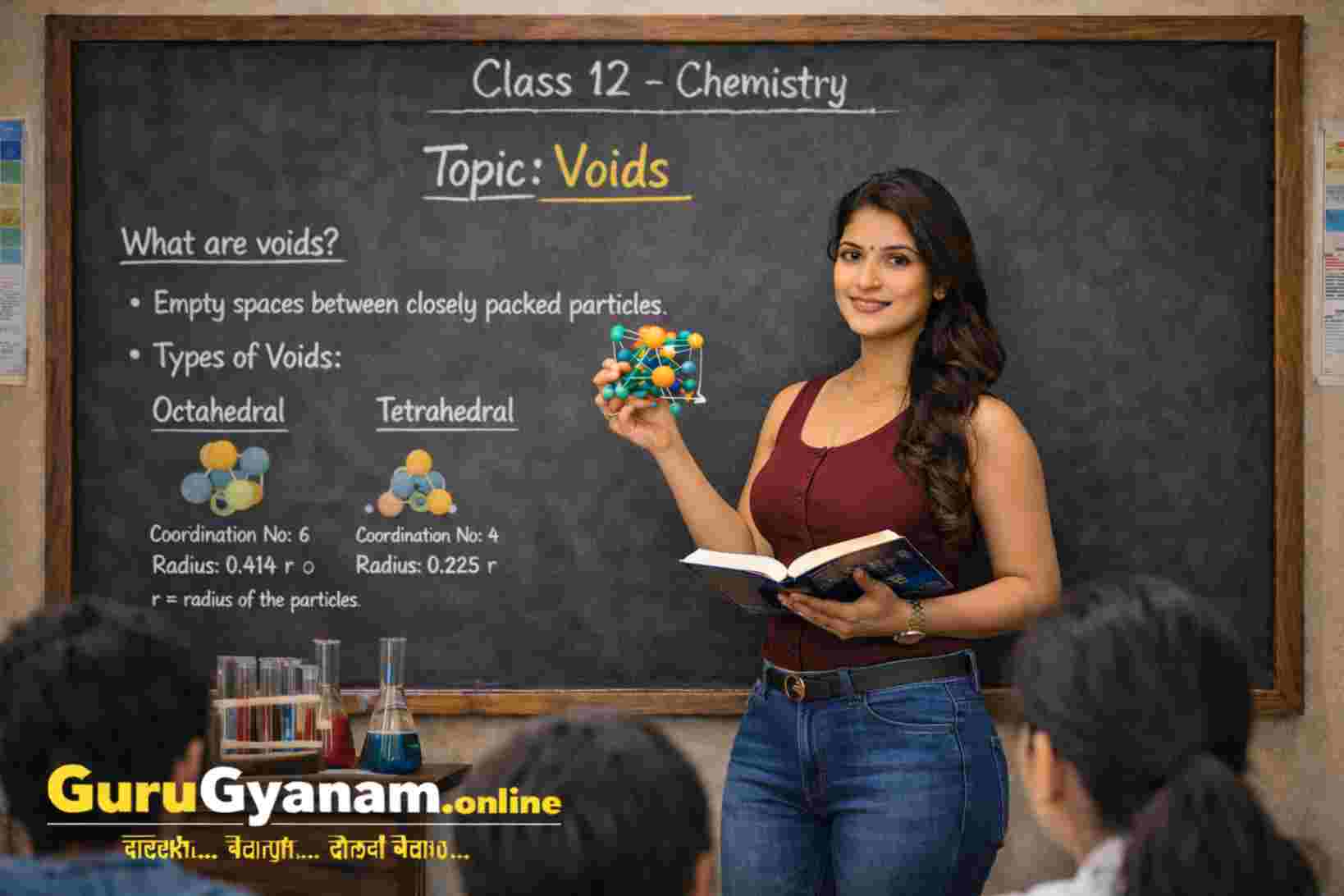
Solid State chapter के एक छोटे लेकिन बहुत scoring topic – Voids (रिक्त स्थान) को पढ़ेंगे।
UP Board परीक्षा में इससे one-line questions, MCQs और short answers लगभग हर साल आते हैं।
1. Voids क्या होते हैं? (Definition)
जब atoms या ions को hard spheres मानकर pack किया जाता है, तो उनके बीच कुछ खाली स्थान रह जाते हैं।
इन खाली स्थानों को ही (रिक्त स्थान) कहते हैं।
👉 सरल शब्दों में: Packing के दौरान जो खाली जगह बचती है, वही void है।
2. रिक्त स्थान क्यों बनते हैं?
- Spheres perfectly space को fill नहीं कर पाते
- Geometrical limitation के कारण
- Different types of packing की वजह से
3. रिक्त स्थान के प्रकार (Types of Voids)
Solid State में मुख्य रूप से दो प्रकार के रिक्त स्थान पढ़े जाते हैं:
(A) Tetrahedral Void
- चार spheres से घिरा होता है
- Shape: Tetrahedron जैसा
- Size: छोटा
👉 Radius ratio:
[
r_{void} = 0.225 , r
]
(B) Octahedral Void
- छह spheres से घिरा होता है
- Shape: Octahedron जैसा
- Size: Tetrahedral void से बड़ा
👉 Radius ratio:
[
r_{void} = 0.414 , r
]
4. Number of रिक्त स्थान (बहुत Important)
यदि spheres की संख्या = N
- Number of tetrahedral voids = 2N
- Number of octahedral voids = N
👉 Exam Line:
Number of tetrahedral voids is twice the number of spheres.
5. Voids और Packing का संबंध
👉 Packing जितनी compact होगी,
✔ Voids का आकार छोटा होगा
✔ Density अधिक होगी
इसी कारण FCC packing में voids अच्छी तरह defined होते हैं।
6. रिक्त स्थान का उपयोग (Importance of Voids)
- Ionic solids की संरचना समझने में
- Interstitial compounds बनाने में
- Density और coordination समझने में
7. Real Life Examples
- NaCl structure → Octahedral void
- ZnS structure → Tetrahedral void
8. Exam Importance (UP Board)
✔ MCQs (number & size of voids)
✔ One-line questions
✔ Short answers
✔ Diagram based questions
अगर आपने formulas और numbers याद कर लिए, तो full marks easy हैं।
Q1. रिक्त स्थान क्या होते हैं?
Ans. Packing के दौरान spheres के बीच बने खाली स्थान।
Q2. रिक्त स्थान क्यों बनते हैं?
Ans. Spheres पूरी जगह नहीं भर पाते।
Q3. रिक्त स्थान कितने प्रकार के होते हैं?
Ans. दो – Tetrahedral और Octahedral।
Q4. Tetrahedral void क्या होता है?
Ans. चार spheres से घिरा void।
Q5. Octahedral void क्या होता है?
Ans. छह spheres से घिरा void।
Q6. कौन–सा void छोटा होता है?
Ans. Tetrahedral void।
Q7. कौन–सा void बड़ा होता है?
Ans. Octahedral void।
Q8. Tetrahedral void का shape कैसा होता है?
Ans. Tetrahedron जैसा।
Q9. Octahedral void का shape कैसा होता है?
Ans. Octahedron जैसा।
Q10. यदि spheres की संख्या N हो तो tetrahedral रिक्त स्थान कितने होंगे?
Ans. 2N।
Q11. यदि spheres की संख्या N हो तो octahedral रिक्त स्थान कितने होंगे?
Ans. N।
Q12. Radius ratio (tetrahedral void) कितना होता है?
Ans. 0.225 r।
Q13. Radius ratio (octahedral void) कितना होता है?
Ans. 0.414 r।
Q14. रिक्त स्थान किस packing में पाए जाते हैं?
Ans. सभी types की packing में।
Q15. Voids packing efficiency को कैसे प्रभावित करते हैं?
Ans. अधिक रिक्त स्थान → कम packing efficiency।
Q16. FCC packing में रिक्त स्थान क्यों important हैं?
Ans. Ionic structures समझने के लिए।
Q17. NaCl में कौन-सा रिक्त स्थान भरा जाता है?
Ans. Octahedral void।
Q18. ZnS में कौन–सा void भरा जाता है?
Ans. Tetrahedral void।
Q19. Voids density को कैसे प्रभावित करते हैं?
Ans. रिक्त स्थान बढ़ने पर density घटती है।
Q20. क्या रिक्त स्थान खाली रहते हैं?
Ans. नहीं, कई बार ions से भरे होते हैं।
Q21. Interstitial compound क्या होता है?
Ans. Void में atom के प्रवेश से बना compound।
Q22. Voids solid state में क्यों पढ़ाए जाते हैं?
Ans. Structure और bonding समझने के लिए।
Q23. रिक्त स्थान और coordination number में क्या संबंध है?
Ans. Void भरने से coordination number तय होता है।
Q24. Tetrahedral voids अधिक क्यों होते हैं?
Ans. Geometry के कारण।
Q25. Board exam में रिक्त स्थान topic क्यों scoring है?
Ans. Direct formula और one-line questions आते हैं।
Teacher’s Final Advice